Introduction to Employee Branding in Nepal
Picture this: It’s 10:15 AM on a Monday, your HR inbox is overflowing, managers are being chased for feedback, and a few top candidates have already disappeared. By afternoon, one of your best current employees resigns -“better offer elsewhere.”
If you’re doing human resource management in Nepal, this probably sounds familiar. Most of these headaches aren’t about salaries or job ads – they come from something deeper: it’s actually employee experiences, expectations of employees, your employer brand, the way people feel about the work environment at your company.
Across Nepal – from IT parks to banks to startups – candidates are researching employers like never before. They check LinkedIn, read reviews, watch TikTok culture videos, and ask friends. If your employer brand is unclear, the best talent simply moves on.
This guide shows, in a practical and local way, why effective employer branding is now a must in Nepal, especially with Gen Z entering as potential employees in 2026, remote work on the rise, and competition for skilled talent heating up.
To see how companies in Nepal can improve their overall hiring approach alongside employer branding, you can also explore our guide on Best Recruitment Practices for Nepalese Employers.
What Exactly Is Employer Branding?
Employer branding is how people perceive your company as a workplace. It includes:
- What candidates think before applying
- What employees say about your company after work
- Why someone choose your company over competitors
Employer Brand vs EVP (Employer Value Proposition)
| Term | Meaning |
| Employer Brand | Public image of your company in the job market |
| EVP | The value, growth, culture, and experience you promise employees |
Strong employer brands in Nepal come from clear EVPs, reflecting growth opportunities, team culture, leadership, flexibility, career paths, and work-life balance.
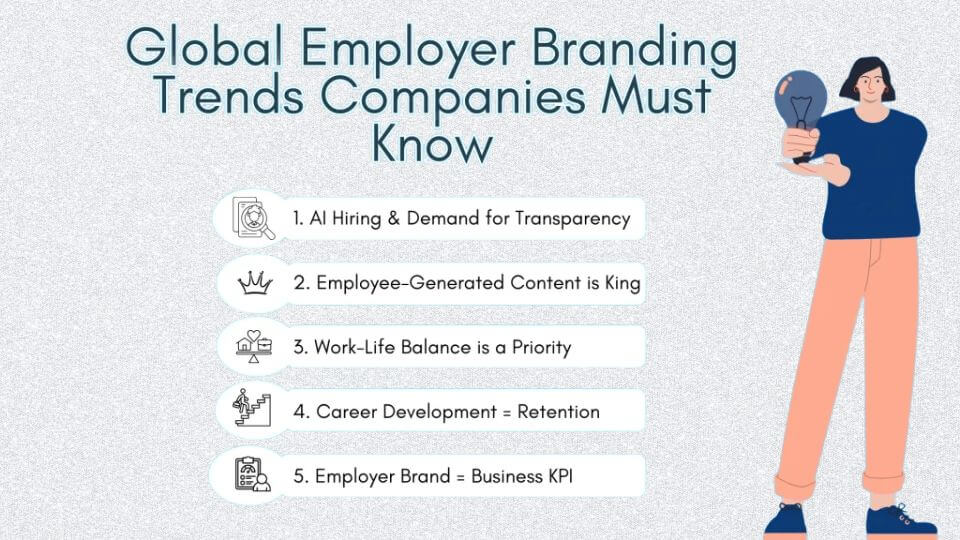
Global & Nepali Employer Branding Trends (2026)
To understand why employer branding is becoming urgent in Nepal, let’s look at what’s happening globally:
1. AI Hiring & Demand for Transparency
Faster responses, structured interviews, and AI-powered tools are now expected. Slow processes make Nepali companies look outdated. Nepali companies using slow, manual processes look outdated by comparison.
You can check this related blog about how AI is changing the recruitment process in Nepal.
2. Employee-Generated Content is King
Authentic stories from real employees outperform corporate posts.
3. Work-Life Balance is a Priority
Flexibility is a deciding factor; remote/hybrid policies are key.
4. Career Development
Employees leave without clear internal mobility paths.
5. Employer Brand = Business KPI
Strong brands attract talent 2x faster, reduce hiring costs, and retain employees longer
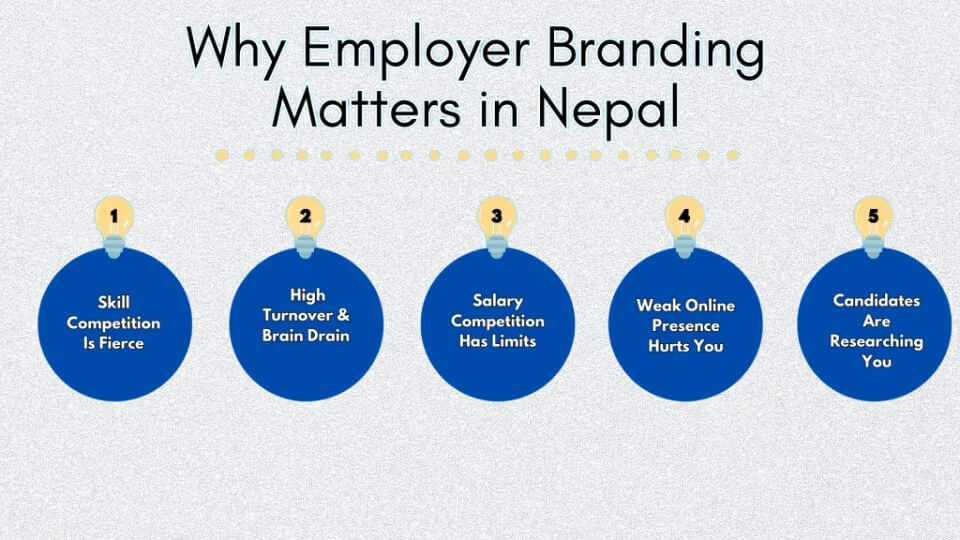
Why Employer Branding Matters in Nepal
Nepal is going through a major shift in hiring behavior. These are the most important local reasons employer branding is now urgent:
1. Skill Competition Is Fierce
IT, BFSI, Fintech, Digital Marketing, and Engineering roles are highly competitive. Everyone is chasing the same small talent pool.
Strong employer branding efforts help you stand out without inflating salaries.
2. High Turnover & Brain Drain
Talented Nepalis have more choices now-remote jobs, Gulf opportunities, and global freelance roles.
Employer branding helps build loyalty, stability, and belonging.
3. Salary Competition Has Limits
Many Nepalese organizations try to win candidates with salary alone, but that’s not sustainable.
Culture, growth, flexibility, and purpose are now bigger decision-makers.
4. Weak Online Presence Hurts You
Nepali companies often have:
- outdated career pages
- vague job posts
- no social media branding strategies
- no employee stories
- This makes strong candidates feel unsure and uninterested.
For improving job posting quality and employer visibility, our article How to Use LinkedIn Effectively for Recruitment in Nepal provides proven tactics for Nepali companies.
5. Candidates Are Researching You
Before applying, candidates check:
- LinkedIn profiles
- Facebook pages
- Company websites
- Reviews
- Employee posts
If they don’t find enough information, they move on.
Corporate Social Security
Corporate Social Responsibility (CSR) is also becoming a major part of employer branding in Nepal.
Today’s candidates – especially Gen Z and young professionals – want to work for companies that contribute positively to society, not just chase profits. Nepali organizations that actively engage in environmental projects, community development, women empowerment, education initiatives, or local social impact programs build stronger trust and emotional connection with job seekers.
CSR efforts show that your company stands for something meaningful. This creates a sense of purpose, improves internal pride among employees, and makes your employer brand more appealing compared to competitors who do not highlight social impact.
Explore our article on the topic Labour Act 2074 & Compliance for Hire in Nepal: Easy Guide for better understanding of laws and compliance for hiring in Nepal.
Gen Zs Entering Nepal’s Workforce
This is a game-changing shift. Gen Z will soon dominate hiring in Nepal, and they bring completely different expectations.
What Gen Zs Cares About:
- Transparent culture
- Work-life balance
- Growth and learning
- Flexibility
- Mental health support
- Meaningful work
- Digital communication
They research employers deeply before applying. They want to see the culture, feel the values, and understand the growth path.
If your employer brand doesn’t reflect these things, Gen Z simply won’t apply.
To compete for Gen Z talent, companies must also modernize their hiring funnel. Our guide Comparing Traditional vs Digital Hiring in Nepal explains how expectations have shifted.
What Nepali Companies Must Show to Attract Gen Z:
- real workplace stories
- mentorship and growth
- flexible/hybrid environment
- open leadership style
- modern work culture
Companies that fail to adapt will lose young talent to foreign companies or remote jobs.
Remote Work & Flexibility Are Reshaping Candidate Expectations
Post-2022, remote and hybrid work became normal in Nepal-especially in IT, digital, customer support, and creative roles.
Nepali candidates now expect:
- flexible timing
- hybrid work
- some remote days
- trust-based culture
- digital-first tools
And hiring data shows companies offering flexibility receive 3 – 4x more applicants.
Why This Ties to Employer Branding
Your employer brand must clearly communicate:
- your remote/hybrid approach
- collaboration tools
- flexible policies
- team culture
- work-life balance
If not, candidates assume your company is traditional, rigid, and outdated.
Competitive Talent Market: Why Branding Beats Budget
Nepal’s hiring scene is fiercely competitive. Roles in IT, fintech, BFSI, and digital marketing are no longer just about posting jobs – they’re about attracting quality job seekers before your competitors do.
Suppose you are a startup in Kathmandu trying to hire a full-stack developer. You offer a decent salary, but your competitor provides better employee satisfaction:
- Has a strong social media presence
- Showcases real employee stories
- Highlights career growth opportunities
Who do you think the candidate will choose?
Most likely, your competitor, right !?
The following are some employer branding benefits for any company:
- Reduces cost-per-hire by attracting pre-qualified candidates
- Increases offer-acceptance rates since candidates are already sold on your culture
- Helps smaller companies compete with larger organizations
In Nepal, companies like Chaudhary Group, Daraz Nepal, IME Pay, and Nabil Bank consistently attract higher-quality applicants organically because their branding is clear, visible, and trusted.
How Strong Employer Branding Helps Recruitment in Nepal
Employer branding doesn’t just look good-it delivers measurable recruitment results:
- Better Applications: Candidates self-select based on your culture and EVP.
- Faster Hires: Strong branding reduces the time taken during talent acquisition.
- Lower Churn: Employees attracted by culture and growth tend to stay longer.
- Fewer Dropouts: Candidates accept offers faster and are less likely to withdraw.
- Higher Offer-Acceptance Rates: People trust companies with authentic branding.
For direct hire Nepal or direct recruitment Nepal, employer branding ensures you get candidates who are aligned with your mission from the first touchpoint. Explore our article on direct hire in Nepal for more insights.
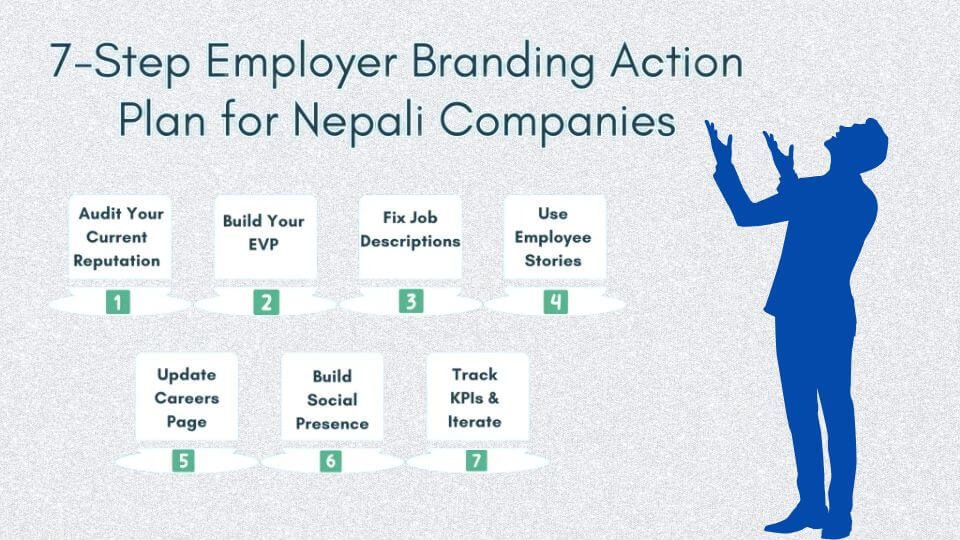
7-Step Employer Branding Action Plan for Nepali Companies
Here’s a practical, local roadmap to strengthen your employer brand:
1. Audit Your Current Reputation
Review careers page, LinkedIn Life, MeroJob profile, employee reviews, and social media. Identify gaps between perception and reality.
2. Build Your EVP (Employee Value Proposition)
Define what makes your company unique in Nepal: opportunities for growth, flexible work, company culture, mentorship, creating an environment for learning, and benefits.
This helps in attracting employees.
3. Fix Job Descriptions
Make JDs human and engaging. Include Nepal-specific long-tail keywords:
- “employer branding Nepal”
- “employer branding for IT companies Nepal”
- “recruitment branding Nepal”
4. Use Employee Stories
Feature real stories: achievements, day-in-the-life in the organization as an employer videos, short Instagram reels, or LinkedIn posts.
5. Update Careers Page
Make it engaging and authentic. Include FAQ section, culture photos, team interviews, and EVP highlights.
6. Build Social Presence
LinkedIn, Instagram, YouTube, and even TikTok can showcase positive work culture, employee testimonials, and remote-friendly practices.
7. Track KPIs & Iterate
Measure time-to-hire, application quality, offer acceptance, and retention of employees. Collect candidate feedback and adjust messaging.
Tools Nepali HR Teams Can Use
- LinkedIn Life & Careers Page
- MeroJob / JobsNepal Employer Profile
- Instagram Reels & Stories
- YouTube Shorts / Company Clips
- Internal Newsletters & Employee Referrals
- TalentSathi platform for showcasing EVP and job posts
Platforms like TalentSathi also help to highlight your employer brand, showcase EVP, and post jobs reflecting culture and growth opportunities.
For sourcing talent efficiently, you can also check Top Free Best Job Vacancy Portals and Platforms for Nepali Employees.
Quick Wins in 7 Days:
- Update one JD with EVP and Nepal-focused keywords.
- Publish one employee microstory (100-150 words) with photo.
- Add a “Why Work With Us in Nepal” blurb to your careers page.
- Collect 3 employee testimonials for social sharing.
Conclusion
Employer branding is no longer optional-it’s the competitive edge for Nepali companies.
Suppose you are a founder or HR leader in Nepal today: building a strong employer brand isn’t just about image; it’s about securing the right talent, reducing hiring costs, and creating a culture that retains employees.
With Gen Z entering the workforce, remote work rising, and talent competition intensifying, a clear employer brand will separate companies that struggle from those that thrive.
Start small, act consistently, and your brand will naturally attract, hire, and retain top talent in Nepal.
Frequently Asked Questions
How can companies improve employer branding in Nepal in 2026?
By defining a clear EVP, sharing employee stories, staying active on LinkedIn/TikTok, and keeping HR communication transparent.
What makes a strong EVP in Nepal?
Clear growth paths, fair pay, supportive culture, flexibility, and learning opportunities.
What are the best employer branding channels in Nepal?
LinkedIn, Facebook groups, TikTok videos, career pages, MeroJob profiles, and employee testimonials.
How does employer branding reduce turnover in Nepal?
It sets realistic expectations, improves culture, boosts recognition, and helps employees feel valued.
What employer branding trends will shape 2026 in Nepal?
Video hiring content, flexible work, mental-health benefits, skill-based hiring, and AI-powered career pages.
How can companies measure employer branding success?
Monitor application quality, offer acceptance rate, retention rate, social engagement, and career page traffic.
Is employer branding only for big companies in Nepal?
No. Small companies can use social media, EVP clarity, and employee stories to build strong brands on a low budget..