
High employee turnover has become a serious challenge for many Nepali companies. Employees leaving causes the business to lose money on hiring, training, and productivity. The constant staff turnover weakens long-term stability and slows the growth of the business.
The problem doesn’t stop at cost. A high turnover rate indicates deeper organizational issues. Employees quit due to salaries not keeping pace with the rising cost of living. Many fail to see a growth opportunity, while others feel stressed. These issues build frustration over time until people decide to find a better opportunity.
The good thing is that businesses can reduce employee turnover with the right employee strategies. Competitive pay, clear career paths, better leadership, open communication, and mental health support can create a workplace where people want to stay.
This guide will explain the causes of employee turnover in Nepal and how businesses can reduce employee turnover effectively in 2026.
What is Employee Turnover and Why is it a Big Problem in Nepal
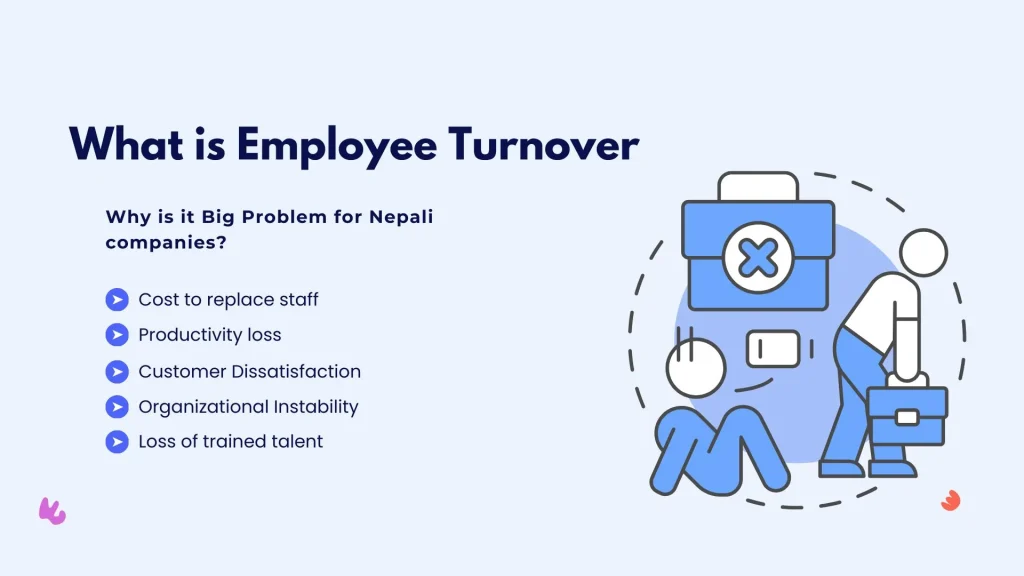
Employee turnover means the rate at which employees leave a company. It involves staff who resign, retire, or are dismissed. A high turnover rate signals problems in a workplace, affecting financial and operational performance. Here is how high turnover can hurt Nepali companies:
Cost to replace staff
While hiring new employees, a business must advertise jobs, screen applicants, conduct interviews, and train new hires. These steps take time and resources.
Productivity loss
A new employee takes time to adjust to the role. In that duration, productivity drops, work slows down and goals get delayed.
Customer Dissatisfaction
When an experienced staff member leaves, customer service is affected. Clients must deal with new people who can have a hard time understanding their needs.
Organizational Instability
Constant turnover disturbs teamwork as it’s hard to build trust and maintain a consistent workflow.
Loss of trained talent
When a skilled employee leaves, their knowledge goes with them.
Why is Employee Turnover Increasing in Nepal

Several cultural and economical factors have pushed the staff turnover rate in Nepal. These include large gaps in salary expectations, rising living costs, and better opportunities abroad.
Foreign Employment
Many youths choose to work abroad as foreign jobs pay more and offer a better lifestyle.
High competition for skilled workers
Skilled workers in sectors like IT, finance, and marketing get multiple offers. They leave quickly for better pay or better working conditions.
Political and economic instability
The employees are not secure due to the uncertain economic conditions. A lot are changing jobs in search of stability or better pay.
Common Reasons Employees Leave Companies in Nepal
Lack of career growth
Employees won’t stay in the company if they see a lack of growth opportunities. They want to see the future in the company with paths to promotion.
Workplace stress and burnout
Workload and pressure without any breaks lead to burnout. Most people resign in order to protect their mental health.
Weak leadership or Toxic management
The direct manager significantly influences an employee’s decision to remain or quit. Lack of communication, disrespect, or micromanagement drives away people.
Compensation and cost of living
Salary is one of the biggest reasons people leave. The salaries in most Nepal-based companies do not match the rising cost of living in Kathmandu and other cities. When employees feel they are not paid enough, they look for better opportunities.
Delayed benefits like Provident Fund or Social Security Fund also lead to frustrating and distrusting. Companies without any benefits, like health insurance, can also make employees take steps to find better opportunities.
Ten Effective Strategies to Reduce Employee Turnover in 2026
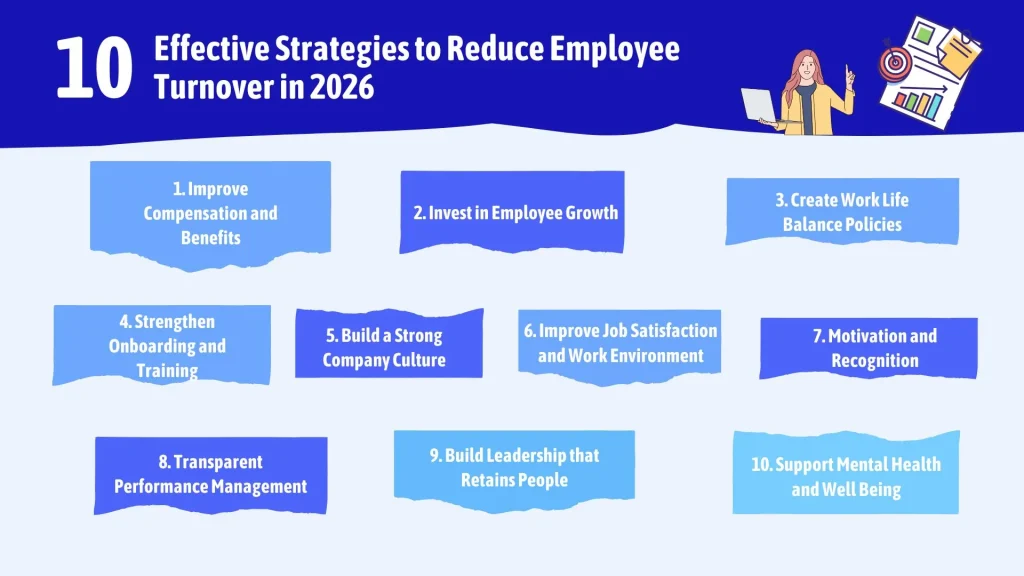
The following are 10 employee retention strategies that Nepali companies can employ in order to minimize staff turnover and enhance long-term stability.
1. Improve Compensation and Benefits
Offering a competitive salary and benefits is the strongest way to reduce employee turnover in Nepal.
Key steps include:
- Adjust the salaries based on market standards
- Offer festival bonuses which hold cultural value in Nepal
- Provide insurance, leave benefits and timely bonus structures
Competitive pay helps with employee retention and builds loyalty.
2. Invest in Employee Growth
Employees stay longer when they see career development opportunities within the company. Creating clear career paths and promotion frameworks helps employees to remain in the company. You can help in their professional development by:
- Conduct training, workshops, and skill development trainings
- Build leadership programs for future managers
- Promote employees internally before recruiting external hires
3. Create Work Life Balance Policies
Work-life balance is a major priority for young professionals in Nepal. Some practical steps you can take are:
- Provide hybrid or remote work options where possible
- Allow flexible working hours
- Encourage breaks and recovery time
- Avoid pushing teams into constant overtime
4. Strengthen Onboarding and Training
The first three months of an employee’s experience play a vital role in employee retention. A poor onboarding process increases early resignations.
You can improve on onboarding process by:
- Creating a friendly orientation program
- Set clear expectations from day one
- Assign a mentor to guide new hires
- Provide structured training and documentation
A strong start builds confidence, improves workplace culture, and reduces turnover. For deeper guidance, companies can also refer to external resources, such as Indeed’s new employee orientation guide.
5. Build a Strong Company Culture
Company culture defines the feeling of the employees in the company. A healthy culture minimizes turnover. Elements of strong culture are:
- Respect-based leadership
- Open and honest communication
- Recognition and appreciation
- Clear policies and fair treatment
Employees who are well-treated are likely to stay.
6. Improve Job Satisfaction and Work Environment
Satisfied employees are more likely to stay longer. Job satisfaction depends on both physical and psychological comfort. Ways to improve this are:
- Using feedback from employees
- Analyse exit interviews and find patterns
- Maintain a safe and respectful workplace
Small improvements in the environment can help organizations to retain talent.
7. Motivation and Recognition
Recognition program makes employees feel appreciated. Without it, even well-paid employees may feel neglected. Here are some simple recognition ideas:
- Employee of the month programs
- Long service rewards
- Appreciations and encourage employees during team meetings
- Public recognition of achievements
These small steps cost little but can keep employees engaged and motivated.
8. Transparent Performance Management
Employees want clarity about how their performance is being evaluated. You can build transparency through:
- Clear performance metrics
- Regular feedback conversations
- Development-focused reviews
- Easy interaction between employees and managers.
With a fair performance system, trust grows, improving employee morale.
9. Build Leadership that Retains People
Managers can easily drive away employees rather than the company. Good leadership is essential to attract and retain employees. Qualities of retention-focused leaders are:
- Compassionate and supportive
- Good listeners
- Skilled in conflict resolution
- Able to motivate teams
- Zero tolerance for toxic behaviour
The training managers enhance the work environment.
10. Support Mental Health and Well Being
Many successful companies recognize the importance of mental health. Supporting the idea:
- Access to counselling or mental health sessions
- Employee assistance programmes.
- Mental health days when needed
- Policies that reduce burnout
- Clear job roles to avoid confusion
This helps to retain top talent and enhance employee performance.
Low-Cost Employee Retention Strategies for Nepali SMEs
Not all businesses are able to pay huge salaries or extreme benefits. Nevertheless, simple and cheap practices can still be used by small and medium enterprises to decrease the turnover of employees.
- Recognition and appreciation programs
- Clear career development roadmap planning
- Monthly appreciation meetings
- Create good policies and practices
- Internal learning and knowledge sharing sessions
These simple steps can significantly reduce turnover and build loyalty without heavy expenses.
How to Implement These Strategies in the Nepali Context
The development of retention strategies takes planning and consistency.
- Begin with small improvements in models of communication and feedback.
- Maintain proper HR documentation and policies
- Compare salaries with other companies in the same industry.
- Train managers to become better leaders
- Build a culture of respect and transparency
You can also explore resources like best recruitment practices in Nepal or common recruitment mistakes in Nepal to strengthen the foundation of your HR approach.
Employee Retention Trends in Nepal for 2026

Clear trends that will shape the Nepali workforce in 2026:
Growth of hybrid work
Most organizations will keep flexible or hybrid work models, especially in IT, education and the service sector.
Young workforce prefers a flexible culture
Young millennials and Gen Z want freedom, work-life balance, and supportive managers.
Skill-building improves retention
Those who invest in training and development will retain employees longer since they feel appreciated and prepared for the future.
AI-powered human resource tools
An increased number of companies will be using digital tools to track performance, onboarding and engage surveys. The tools enable managers to recognize problems in time and enhance the employee experience
Measuring Success and Continuous Improvement
Companies need to monitor progress in order to minimize turnover of employees. Important KPIs include:
- Turnover rate
- Retention rate
- Survey outcomes of employee engagement.
- Exit interview insights
- Training participation
- Productivity levels
A data-driven strategy assists firms in understanding what is working and what should be improved
How Do Recruitment Agencies Help to Reduce Turnover
Recruitment agencies can help companies to reduce employee turnover by improving the quality of hire. Agencies can prevent high staff turnover by placing candidates who match both the job and the company culture.
Agencies understand the market trends and guide companies on competitive compensation so the new hires feel valued from the start.
Another way agencies help is by strong screening. They check skills, experience and background so you get good candidates in the current competitive job market.
For small companies without a full HR team, agencies can act as hiring partners. They will handle the full recruitment process while reducing recruitment costs.
Overall, the benefits of using a staffing agency are that they build a stable workforce, reduce hiring mistakes and help retain employees
Conclusion
The turnover of employees is one of the largest issues of Nepali companies. The major cause of the higher turnover rate is due to low remuneration, stress, absence of growth or poor workplace culture. The companies can decrease employee turnover in Nepal and reinvest in long-term, strong teams by enhancing compensation, providing career advancement, leadership, and sustaining mental health.
When the right strategy is used, companies can retain their top employees and be able to develop a consistent workforce that will help them grow sustainably. The time to act is now. Investment in people, a better culture, and creating an organisation that employees want to stay.
FAQ
What is the average turnover rate in Nepali companies?
Around 20–30% depending on industry and company size.
What is the most effective retention strategy?
Fair compensation, combined with career growth, consistently helps reduce employee turnover
Can small companies reduce turnover without increasing salaries?
Yes, through recognition, flexibility, clear communication, and good leadership.
Why do so many employees leave Nepali companies soon after joining?
Because job expectations don’t match reality, creating dissatisfaction quickly.
Can a recruitment agency and better hiring practices help prevent early resignations?
Yes, they ensure better job-fit through proper screening and clarity.