
Introduction: Importance of Building a Talent Pipeline in Nepal
Most companies in Nepal continue to recruit only when there is a vacancy, this leads to delays, hasty interviewing and lack of good talent fit. This trend is altered by the creation of a talent pipeline in Nepal. It enables the HR departments to strategize, maintain a pool of potential hires and saves time on recruitment.
Close line of recruitment Nepal links directly to HR talent management Nepal and future hiring strategies Nepal. The companies will be able to have a stream of qualified people rather than responding to resignations or new projects. This will aid in effective planning of workforce Nepal and more sustainable business development.
To understand how today’s recruitment methods affect hiring speed, see How to Reduce Time-to-Hire in Nepal.
The importance of talent pipeline Nepal is because of the following key reasons:
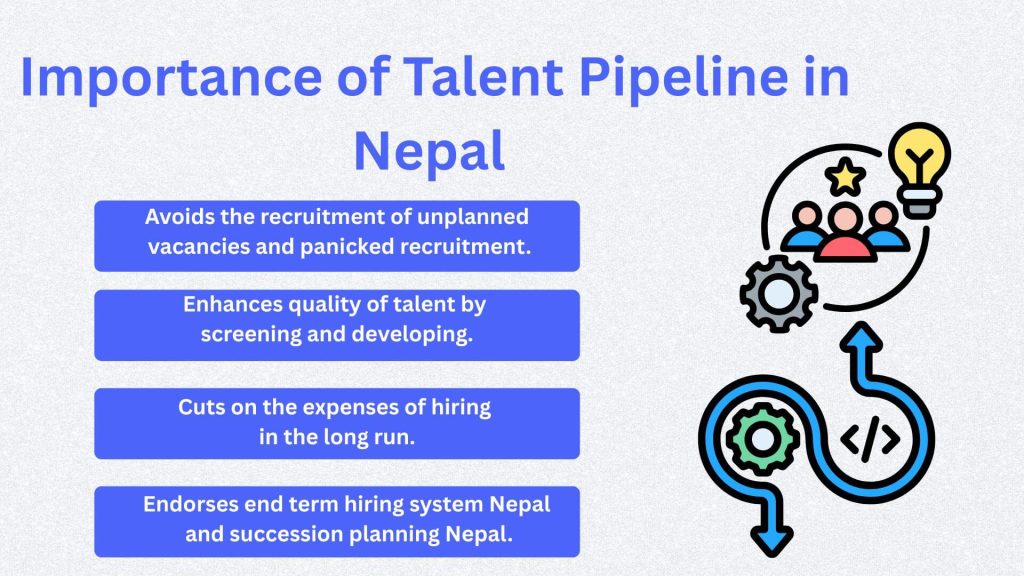
- Avoids the recruitment of unplanned vacancies and panicked recruitment.
- Enhances quality of talent by screening and developing.
- Cuts on the expenses of hiring in the long run.
- Endorses end term hiring system Nepal and succession planning Nepal.
What Is a Talent Pipeline in Nepal
A talent pipeline in Nepal is an organized approach in which firms find, activate, and oversee future employees through a well-structured procedure of identifying, engaging and developing their potential. In case you are wondering what is a talent pipeline, consider it as a list of living people who were already pre screened and who fit your culture and skills requirements
This HR management talent pipeline incorporates passive candidate engagement Nepal and active applicants. Individuals might not get hired instantly but are made to stay warm in case they would have an opportunity to be hired. HR does not begin at the point of zero when a vacancy arises. They can merely transfer the most appropriate individuals off the pipeline into the interview process.
Why Nepali Companies Should Focus on Talent Pipeline Strategy?
Several Nepali companies continue relying on a single job ad and doing the lottery. Competition in the skilled talent pool in Nepal is however, on the increase. Firms that adopt the traditional recruitment methods in Nepal are characterized with lengthy time of hiring, inappropriate fits and missed business opportunities.
A talent pipeline in Nepal provides an optimal long term recruitment plan. It enables the alignment of hiring to the business expansion, project schedule and planning of Nepal. Rather than waiting and hoping that the right person will come at the right time, HR strategies in Nepal can revolve around active recruitment and talent pipeline Nepal. For a better understanding of what successful practices look like, explore Best Recruitment Practices for Nepalese Employers.
The major factors that make talent pipeline strategy in Nepal a necessity:
- Lack of talent and skills in strategic areas.
- Increasing the demand of skilled personnel in the field of technology, finance, operations and sales.
- Requirement of prospective employment pipeline in Nepal to assist growth and new markets.

Understanding the Talent Pool in Nepal
A talent pool in Nepal refers to a pool of potential candidates who are interested in your company or will fit your role requirements even without an open vacancy at the moment. The basis of the talent pipeline is talent pool development.
This pool may be developed as a result of previous applicants, referrals, contacts at the campus, LinkedIn activities, and the talent community Nepal initiatives. It is also specifically applicable to industries where the hiring requirements are recurring or high turnover. The talent pool in Nepal is a long term asset to HR talent management Nepal when managed in a good way.
Development of talent pools assists companies:
- Keep a list of individuals in anticipation of future positions.
- Lessen the necessity of having to source each time afresh.
- Support employee retention strategies Nepal with the help of better fit and culture fit.
Recruitment best Practices in Nepal and Their Limitations
In Nepal, some of the common traditional methods of recruitment process would be placing the advert in job sites, waiting to get the application and rushing in the interviews. This is a reactive style which does not favour future hiring strategies in Nepal.
The following are some of the weaknesses of this type of recruitment pipeline Nepal:
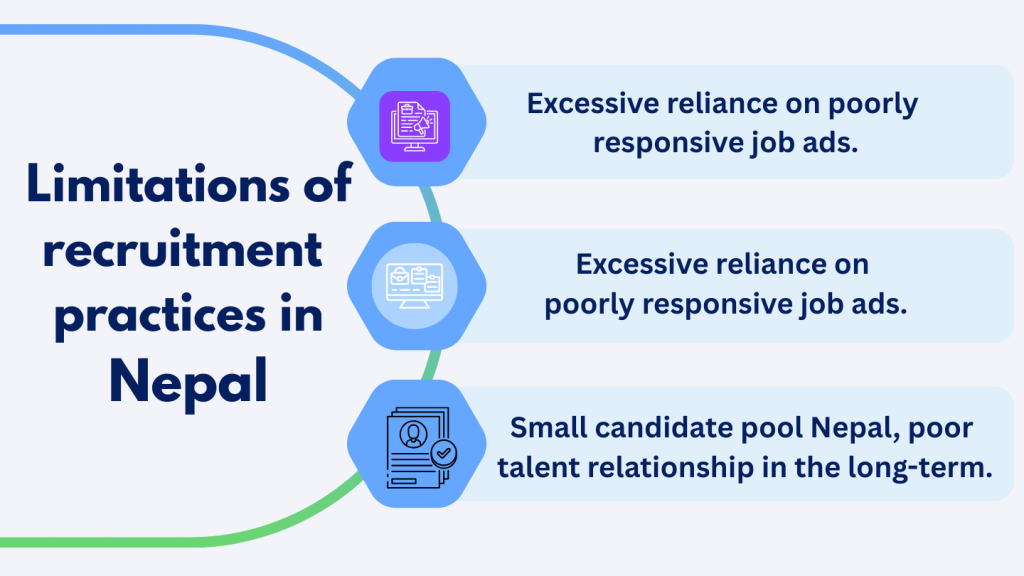
- Excessive reliance on poorly responsive job ads.
- Excessive reliance on poorly responsive job ads.
- Small candidate pool Nepal, poor talent relationship in the long-term.
Companies cannot source their talent and develop pipelines fast without ongoing sourcing of talent and developing pipelines. They also lose good candidates who were interested previously and were not approached once again.
How Talent Pipeline Management Supports Faster Hiring
Talent pipeline management refers to being energetic with maintaining and updating your pipeline and not just keeping the CVs. A talent pipeline of faster hiring is one of the best HR recruitment strategies in Nepal, when it is managed appropriately.
By having ready profiles, companies are able to hire faster as:
- Skills and culture screening of candidates is already done.
- There are already established basic communication and expectations.
- The decision makers are not required to concentrate on the first sourcing but final round assessments.
This strategy saves the money on recruitment and promotes the speed of hiring in Nepal objectives. It also creates confidence between the candidates and employers since there is increased follow up and communication.
Continuous Talent Sourcing for Stronger Pipelines
One of the most significant aspects of candidate pipeline development is continuous sourcing of talent. Rather than sourcing when there is a vacancy, HR departments continue sourcing talent throughout the year.
The examples of continuous talent sourcing approaches:
- Frequent contacts via LinkedIn and social media.
- Career events, webinars and campus drives.
- Creating a talent community in Nepal by using newsletters, events and groups.
- Creating a promising candidate database Nepal.
The ongoing talent sourcing makes the pipeline up to date. It eliminates cases where there are vacancies in a firm, but there are no qualified candidates willing to relocate.
Steps for Building a Talent Pipeline in Nepal
In order to create an effective talent pipeline Nepal, the HR teams may go through the step by step talent pipeline of Nepali firms:
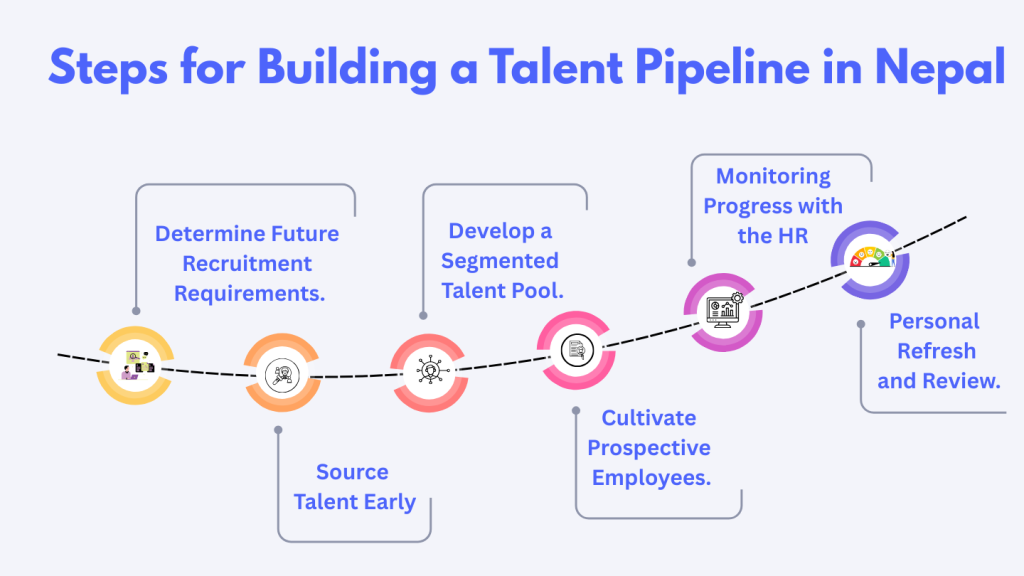
- Determine Future Recruitment Requirements.
- Collaborate with leadership to project roles within six or twelve months.
- Prioritize repetitive roles and priorities skills.
- Source Talent Early
- Make use of job portals, LinkedIn, referral and campus connections.
- Add shortlisted accounts into your candidate database Nepal.
- Develop a Segmented Talent Pool.
- Filter the candidates based on position, experience, location, and preparedness.
- Create strategies to develop a talent pool in Nepal that will suit your core operations.
- Cultivate Prospective Employees.
- Company news, role insights and share updates.
- Make passive candidate interaction Nepal regular and personalization
- Monitoring Progress with the HR Software of Recruitment Nepal.
- Track touchpoints, notes, status using ATS or basic tools.
- Associate this with optimization of the hiring process in Nepal.
- Personal Refresh and Review.
- Eliminate old profiles or individuals that do not fit anymore.
- New candidates should be introduced frequently, to prevent stagnation.
HR Strategies in Nepal for Effective Talent Pipeline Building
To facilitate talent pipeline strategy in Nepal the HR teams require realistic and practical HR strategies in Nepal. Some examples:
- Recruitment Nepal using HR software to administer pipelines rather than spreadsheets.
- Invest in content and employer branding that will draw the talent community to Nepal.
- Integrate talent acquisition Nepal and employee retention strategies Nepal in order to make people stay longer.
The recruitment strategies of HR Nepal provide a good base to carry on sourcing of talent and prospective hiring pipeline in Nepal. HR is also more strategic, less responsive, and more aligned with business interests.
Best Long Term Hiring Strategy for Nepali Companies
The most suitable long term recruitment strategy in Nepal is proactive, data based and pipeline based. It links talent acquisition Nepal and workforce planning Nepal as well as succession planning Nepal.
Raising funds through long term hiring is important in a best long term hiring strategy that involves key elements such as:
- Unambiguous predictions of future positions and competences.
- Well developed talent pools and pipelines.
- Constant interaction with the candidates and individual communication.
- Periodic checking of the pipeline Nepal performance indicators of recruitment.
When properly used, this strategy saves time to hire, increases the quality of hire, and provides the leadership with a more affirmative view of growth planning.
Using Data to Improve Talent Pipeline Management
The contemporary HR departments can no longer afford to use guesswork. Information assists in managing talent pipelines to understand how the talent pool is generated, the duration of the hiring process, and drop offs.
The examples of useful data points:
- Average time to hire by role
- Percentage of pipeline-to-interview and offer conversion.
- Interaction with passive applicants in the talent pipeline in Nepal.
Then the HR teams can modify their HR recruitment tactics in Nepal as per the truth, and not speculations. To learn how analytics support modern recruitment, explore Why Should Companies Invest in HR Data and Analytics in Nepal.
Hiring Strategy Example for Nepali Businesses
The following is an example of a simple hiring strategy of a developing Nepali firm:
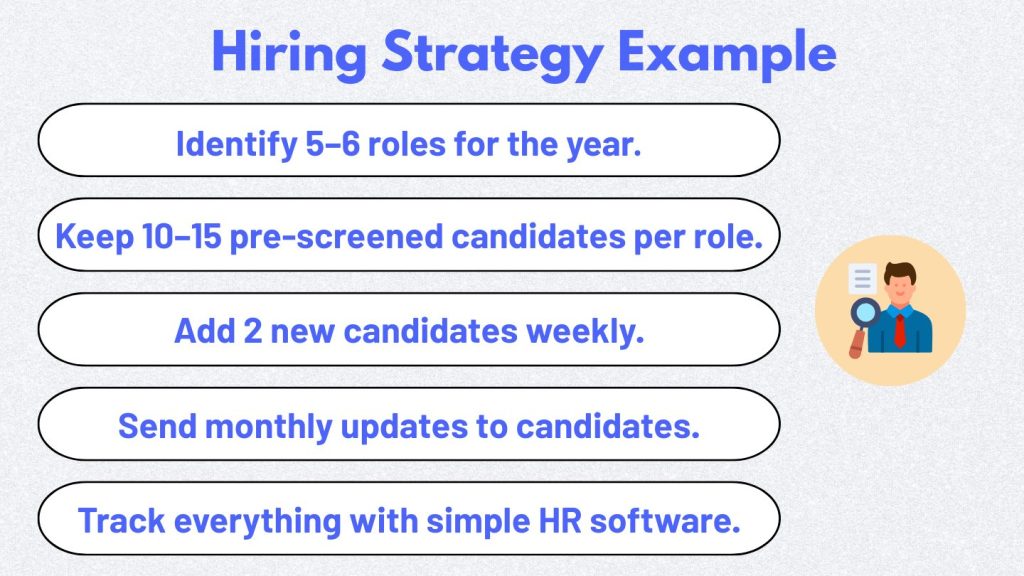
- Predict half a dozen positions necessary within a year.
- In each position, strive to have a pool of ten to fifteen pre screened applicants.
- Bring in at least two new candidates into the pipeline each week.
- Send monthly progress reports to interested candidates.
- Monitor contacts and preparation with simple HR software recruitment Nepal.
Such an organized, systematic system of work allows creating a talent pipeline in Nepal even in the case of small human resources departments.
Digital Tools and Talent Community Building
Talent pipeline management is substantially simpler with the help of HR software and digital tools. Companies can construct a well organized candidate database Nepal as opposed to following the candidates in splintered files. Such useful media and platforms encompass:
- Application pipeline management systems.
- Passive candidate engagement CRM style tools Nepal.
- Talent community Nepal LinkedIn, Facebook groups, email lists.
The digital tools facilitate the recruitment pipeline Nepal development and aid the HR team to remain on the forefront of the talent sourcing which is always continuous with minimal burnouts.
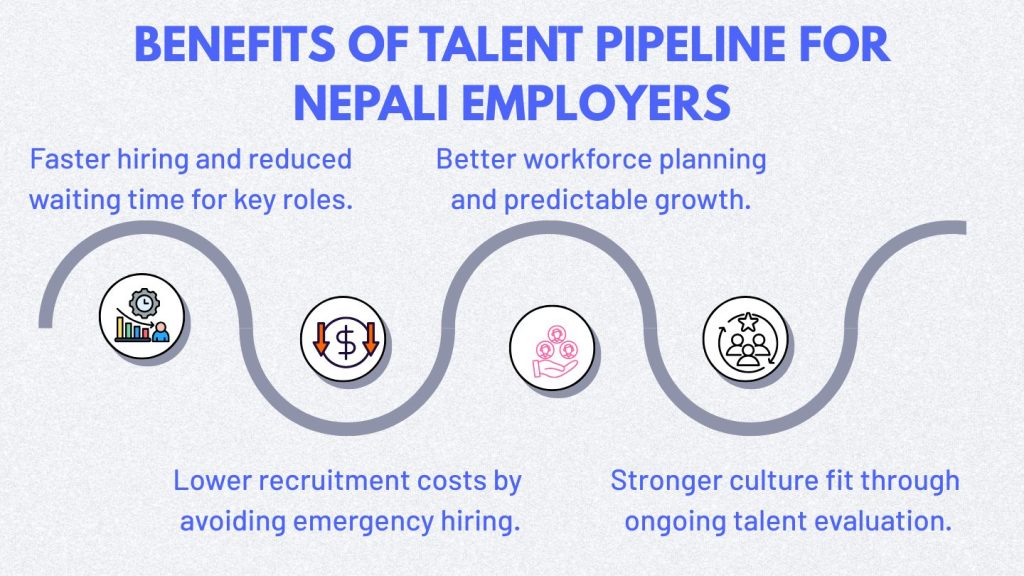
Benefits of Talent Pipeline for Nepali Employers
In investing in development of talent pipeline in Nepal, the companies experience apparent returns both on HR and business performance:
- Quickened hiring and minimized wait times on key positions.
- Reduce cost of recruiting because there will be fewer emergencies hiring.
- Healthier workforce planning Nepal and growth that is more predictable.
- Mightier fit to culture with the continued talent linkage and assessment.
The high-quality talent pipeline in the long run turns into a competitive advantage that other companies can hardly replicate in the short run.
Conclusion: The Importance of Talent Pipeline in the Success of Building Talent Pipe.
The Nepalese labor force is increasingly competitive and reactive recruitment is no longer satisfactory. Firms should have active hiring systems that make them ready to take new positions rather than making a last minute rush. An effective talent pipeline provides organizations with the advantage of hiring fast, the economy that results with a sourcing pressure that is low, and the predictability required in long term workforce planning.
To grow, developing a talent pipeline is not a choice but a strategic privilege of the business. Nepali companies can remain ready, hire the best talent and sustain the momentum even when there are changes in the market by implementing long term hiring measures and investing in continuous talent sourcing.
Frequently Asked Questions(FAQ)
What is a talent pipeline?
A talent pipeline is a pool of pre-screened candidates who are ready to be hired when a role opens.
Why is building a talent pipeline important?
It reduces hiring time, lowers costs, and ensures companies always have strong candidates available.
What does it mean for a candidate to be in a talent pipeline?
It means they are identified as a good fit, engaged regularly, and kept ready for potential future roles.
What is a recruitment pipeline when building a new team?
It’s the step-by-step flow of sourcing, screening, interviewing, and shortlisting candidates for a full team.
What is the first step in building a strong talent pipeline?
Start with workforce planning understanding future hiring needs and required skills.
How do you build and maintain a talent pipeline?
Source proactively, stay in touch with candidates, update their profiles, and keep them engaged until roles open.
How does a business maintain a pipeline during a hiring slowdown?
Continue nurturing candidates through updates, informal chats, and skill-based assessments even without active roles.
How do you build an engineering talent pipeline?
Engage with tech communities, use GitHub and LinkedIn sourcing, partner with colleges, and run coding challenges.
Tips to hire tech talent immediately and still build your pipeline?
Activate passive candidates, run quick assessments, maintain a bench of pre-tested developers, and keep sourcing parallelly.
What contributes to diverse talent pipelines?
Inclusive sourcing, unbiased screening, partnerships with underrepresented groups, and diversity-focused employer branding.