Introduction to Structured Interview
Imagine this for a moment.
Your HR inbox is full. Ten people applied for a job in Nepal, five were shortlisted, and three confirmed the time. You sit inside your interview room, open your laptop, skim their CVs, and jump into the first round. By the end of the day, you have fragmented notes, conflicting feedback from different hiring managers, and no clear scoring. One candidate impressed you with confidence, another with technical skills, and one simply “felt right”.
To fix this chaos, many Nepali companies are now shifting toward a more structured and predictable recruitment process, which you can learn in detail in our guide on 8 Simple Steps to a Successful Recruitment Process in Nepal.
The truth is simple:
Every interview becomes better, fairer, and more reliable when employers use a structured method instead of an unstructured interview.
This article is your full job interview in Nepal guide – a step-by-step interview guide designed for Nepali employers, with a practical checklist, templates, structured steps, and examples. It blends global best practices with local Nepali hiring realities so your teams can interview confidently, consistently, and professionally.
Why Nepali Employers Must Adopt Structured Interviews
A structured interview isn’t just a modern trend. It’s a powerful way to make your recruitment process predictable, fair, and data-driven.
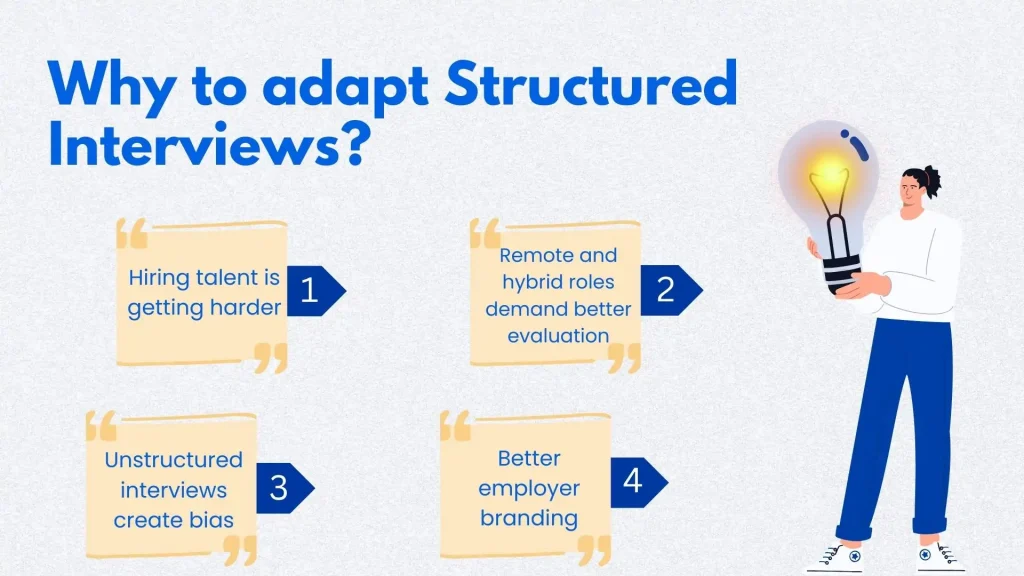
Here’s why it matters in Nepal’s job market today:
1. Hiring talent is getting harder
A structured approach helps you evaluate based on real traits and skills, not who speaks confidently or has the fanciest academic certificates. As competition increases, companies also need strategies to reduce time-to-hire in Nepal, which structured interviews directly support.
2. Remote and hybrid roles demand better evaluation
A growing portion of Nepal jobs now involve remote setups. A virtual job interview introduces challenges – communication, focus, tech readiness. A defined interview process and scoring system ensures fairness regardless of interview format.
3. Unstructured interviews create bias
Most local companies still rely on gut feeling.
Gut feeling creates unfairness.
Structured interviews use:
- A scorecard
- A rating scale
- A functional scoring rubric
- Pre-written structured interview questions
…so every candidate gets a fair shot.
4. Better employer branding
Structured interviews show candidates that you are:
- professional
- respectful
- well-prepared
- serious about employee experience
What Exactly Is a Structured Interview?
A structured interview means:
- You ask the same questions to all candidates
- You score answers using the same rubric
- All interviewers know the job description, job role, and evaluation criteria
- Decisions are based on focusing on the skills, not personal bias
This method aligns perfectly with best recruitment practices for Nepali employers, ensuring consistency and fairness across all roles.
Structured interviews are:
- consistent
- fair
- data-driven
- aligned with hiring the right candidate
They make employers look professional and help hire people with real capability, adaptability, and interest in the role.
Core Principles of Structured Interviews (Nepal Context)
To set the right foundation, Nepali employers should apply these principles:
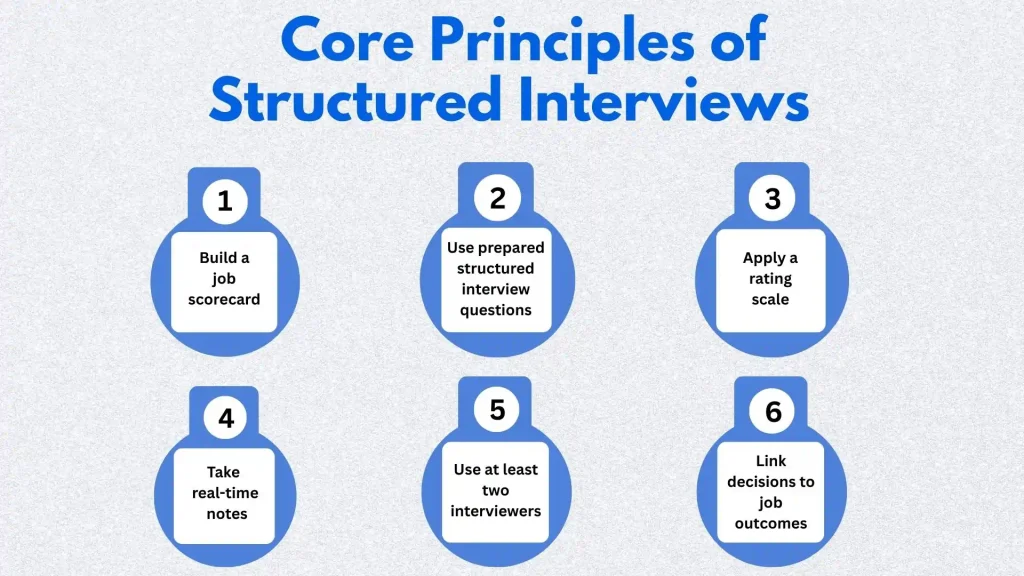
1. Build a job scorecard
This outlines:
- key responsibilities
- required technical skills
- behavioural traits
- cultural fit
- expected outcomes
A scorecard helps interviewers compare candidates objectively for a specific job.
2. Use prepared structured interview questions
Ask all candidates identical questions.
Include behavioural, situational, and role-based questions.
This avoids interviewer bias and ensures fairness.
3. Apply a rating scale
A simple rating scale (1-5) helps compare candidates even across different interviewers and different interview rounds.
4. Take real-time notes
You cannot rely on memory.
Every interviewer should document using the scorecard, especially after interviewing candidates over multiple sessions.
5. Use at least two interviewers if possible
Two different perspectives reduce bias and give a more balanced evaluation.
6. Link decisions to job outcomes
Evaluate based on:
- results
- consistency
- role requirements
- real competencies
This keeps the recruitment process clean and professional.
The Complete Structured Interview Checklist for Nepali Employers
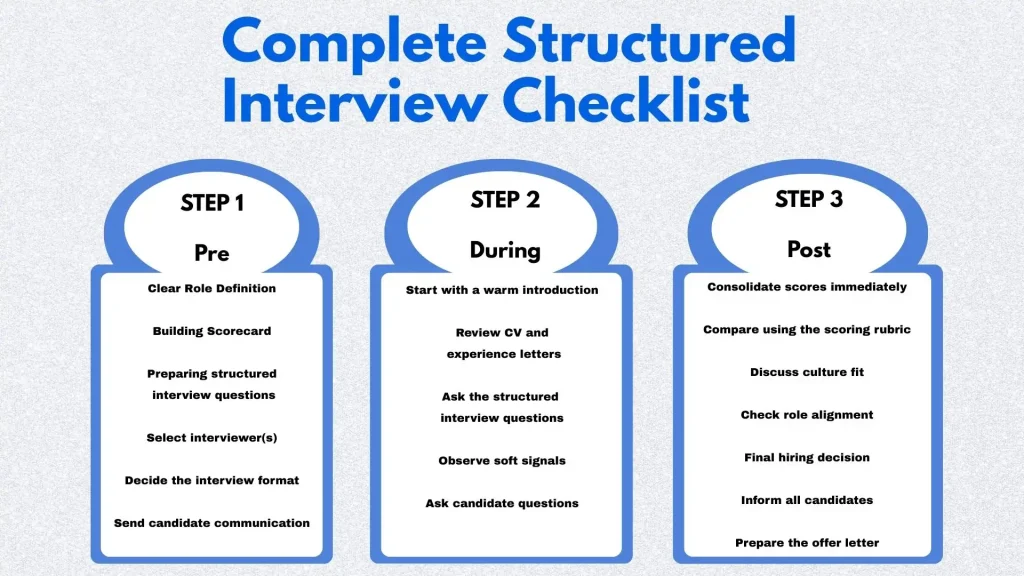
Below is the full checklist divided into three stages.
You will refer to it during every interview to ensure your process remains consistent.
Stage 1: Pre-Interview Checklist
1. Define the role clearly
Your job description should:
- explain what the company does
- outline clear responsibilities
- specify must-have and good-to-have skills
- include behavioural and cultural expectations
This is crucial because many Nepali job seekers apply without fully understanding the role.
2. Build your scorecard
Include:
- technical skills
- soft skills
- communication
- adaptability
- cultural fit
- relevant training or skill
- attitude
- punctuality
Each item gets a rating on the 1-5 scale.
3. Prepare your structured interview questions
Include:
- behavioural questions
- situational questions
- role-based technical questions
- cultural fit questions
Make sure you include at least one question from the examples of structured interview questions section.
4. Select interviewer(s)
Assign roles:
- lead interviewer
- technical evaluator
- culture-fit evaluator
- recruiter or HR witness
The more clarity you have, the smoother the hiring practices become.
5. Decide the interview format
Choose:
- in-person
- virtual
- panel
- multi-stage
Mention this in the invite so candidates are mentally prepared.
6. Send candidate communication
Send:
- interview time
- format
- panel names
- instructions
- what to prepare
This small gesture creates a positive impression and lowers candidate anxiety.
Stage 2: During the Interview
This is where your structure matters most. The goal is to appear confident, fair, and organized.
1. Start with a warm introduction
Explain:
- your role
- company background
- what this interview guide covers
- expected duration
This sets the tone.
2. Review their CV and experience letters
Make sure you have read their:
- responsibilities
- technical skills
- achievements
- credentials
- ATS-formatted CV (if applicable)
Candidates feel respected when employers use their CV seriously.
3. Ask the structured interview questions
- Follow your list.
- Go in order.
- Take notes as they speak.
- Mark scores discreetly.
4. Observe soft signals
From your seat in the interview room or on-screen:
- clarity
- friendliness
- cultural awareness
- adaptability
- confidence
- consistency
These matter in Nepali workplaces.
5. Ask candidate questions
Good candidates always ask about:
- culture
- team
- growth
- onboarding
- long-term stability
This reveals seriousness and interest in the role.
Stage 3: Post-Interview Checklist
Once the candidate leaves the interview room or logs out of their virtual interview, this is where structured hiring truly shows its value. Nepali companies often skip this phase or handle it casually-but these steps separate strong hiring teams from struggling ones.
1. Consolidate the scores immediately
Each interviewer updates the scorecard and applies the rating scale while the conversation is still fresh. This helps avoid personal bias and ensures the evaluation focuses on the skills actually required for the specific job.
2. Compare using the scoring rubric
Your scoring rubric standardizes what “good” looks like.
For example:
- 1 = Poor
- 3 = Meets expectations
- 5 = Excellent
This method creates a data-driven approach instead of guessing based on how someone “felt”.
3. Discuss culture fit
Culture is often misunderstood in Nepali companies, but it matters.
This is where you evaluate:
- communication style
- teamwork
- problem-solving
- Nepali and English language balance
- humility
- cultural awareness
- honesty
- behaviour under pressure
Because cultural fit impacts performance and long-term retention more than many employers realize.
4. Check role alignment
Sometimes candidates perform well in interviews but are misaligned with the job role. This is where you verify:
- readiness
- long-term goals
- required soft skills
- availability
- adaptability
- attitude
This step prevents hiring the wrong candidate simply because they answered well.
5. Final hiring decision
Now combine:
- total scores
- interviewer notes
- technical competence
- culture-fit insights
- red flags
The final decision should feel logical, objective, and fair, not rushed or emotional.
6. Inform all candidates
Always communicate:
- selection
- rejection
- next steps
- timeline
Clear communication avoids misunderstandings, improves your employer reputation, and reduces negative stories on LinkedIn or Glassdoor.
This step also prevents the most common errors we discuss in recruitment mistakes in Nepal.
7. Prepare the offer letter
Once a candidate is selected:
- share offer details
- describe the onboarding timeline
- clarify documents needed
- explain probation
- outline growth path
Ensure your offer letter respects local hiring rules, as covered in our Labour Act compliance guide for Nepal.
Remember: Transparency builds trust.
Examples of Structured Interview Questions
These are important because they give structure to your interviews and help you evaluate consistently. Employers use them globally, and they work well in job interviews in Nepal settings too.
Behavioural Questions
- “Tell us about a time you faced a challenge at work. How did you handle it?”
- “Describe a situation where you disagreed with a team member. What happened?”
Situational Questions
- “If a client asked for something outside your scope, how would you respond?”
- “How would you prioritize tasks if two urgent requests came at once?”
Technical Questions
(Depends on domain-IT, marketing, finance, admin)
- “Explain a project where you used this tool or method.”
- “How do you validate the accuracy of your work?”
Cultural Fit Questions
- “What type of work environment brings out your best performance?”
- “How do you prefer receiving feedback?”
Remote-readiness Questions
- “How do you manage deadlines when working from home?”
- “What do you do when your internet or device fails?”
These are your examples of structured interview questions that can be reused for every job role with small edits.
Remote & Virtual Interview Checklist (Very Important in Nepal)
Remote hiring is now part of Nepal’s job market, especially in IT, digital, customer service, and creative roles. A structured process makes the remote workflow smooth.
Pre-interview
- Test audio and camera
- Ensure good lighting
- Confirm stable internet
- Share meeting link ahead of time
- Keep backup internet or hotspot
During interview
- Maintain eye contact
- Use a quiet room
- Follow the same structured questions
- Observe posture and communication
- Evaluate tech confidence
Post-interview
- Combine scores just like an in-person interview
- Don’t let virtual setup reduce evaluation quality
- Verify candidate’s remote-readiness
This keeps virtual hiring professional and consistent.
How to Evaluate Cultural Fit (Nepal Context)
Cultural fit is often overlooked in Nepali companies-but it’s essential. It prevents clashes, miscommunication, and early resignations.
Focus on:
- respectfulness
- teamwork
- learning mindset
- accountability
- professionalism
- comfort using both English and Nepali
- openness to feedback
- time management and punctuality
This is where you assess whether the candidate fits your company’s values-not just whether they know the job.
Common Mistakes Nepali Employers Make During Interview(And How to Avoid Them)
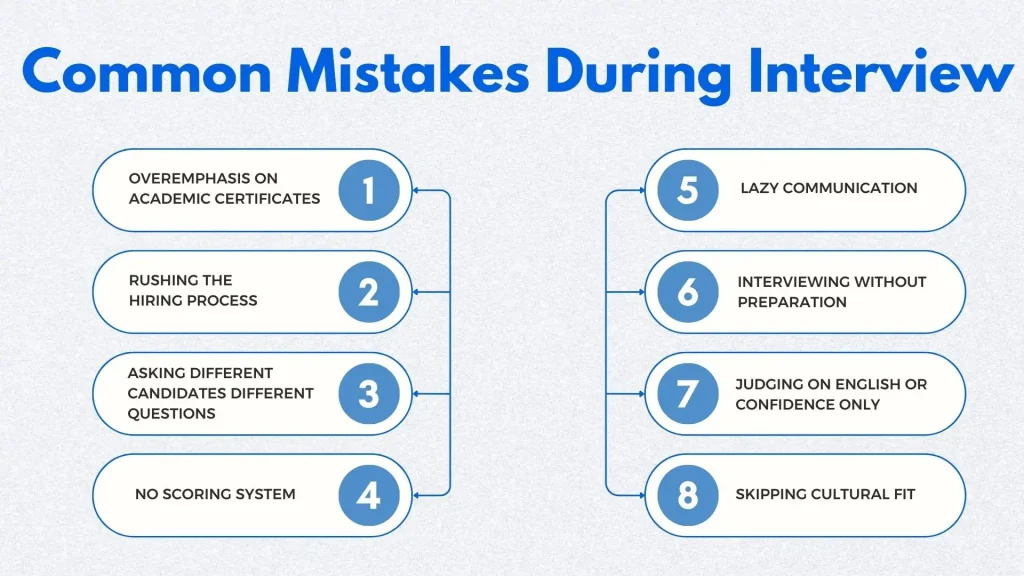
Most mistakes come from rushing, lack of structure, or copying foreign-style hiring without adapting to the Nepali reality. Here’s what to avoid:
1. Overemphasis on academic certificates
Degrees don’t guarantee competence. Evaluate real skills instead.
2. Rushing the hiring process
Fast hiring leads to mismatches and early resignations.
3. Asking different candidates different questions
This breaks fairness and makes comparison impossible.
4. No scoring system
Decisions become subjective.
5. Lazy communication
Ghosting candidates damages your brand.
6. Interviewing without preparation
Candidates instantly sense an interviewer who is not well-prepared.
7. Judging on English or confidence only
Many talented Nepalese professionals are shy but excellent at their work.
8. Skipping cultural fit
This leads to long-term workplace issues.
Avoiding these mistakes significantly improves the quality of your recruitment outcomes.
1-Week Implementation Toolkit (Simple & Practical)
Here’s your quick toolkit to implement structured interviews inside your team, even if you’re a small company or startup.
Day 1: Build job scorecard
Outline:
- key responsibilities
- required technical skills
- behavioural traits
Day 2: Prepare structured interview questions
Include behavioural, situational, cultural, and technical components.
Day 3: Create a scoring system
Define the 1-5 rating explanation and your scoring rubric.
Day 4: Train interviewers
A 45-minute session works:
- review scorecard
- mock interview
- practice scoring
Day 5: Prepare documentation
Include:
- scorecard template
- question set
- decision sheet
- candidate communication drafts
Day 6: Run your first structured interview
Follow the full checklist.
Day 7: Evaluate and refine
Check what worked and adjust before the next hiring cycle.
This implementation makes your hiring process consistent and scalable.
Conclusion: Structured Interviews Are the Future of Hiring in Nepal
If there is one thing to take away, it’s this:
Structured interviews help Nepali employers hire better, faster, and more fairly.
They create:
- clarity
- fairness
- professionalism
- consistency
- better hiring outcomes
They reduce:
- bias
- confusion
- miscommunication
- turnover
- wrong hires
In a competitive hiring landscape, the employers who win are the ones who adopt modern, structured, and candidate-focused systems – not those relying on gut-feeling or informal chats. This approach is the same principle used by the top recruitment agencies in Nepal to secure quality candidates.
Whether you’re hiring for a small team or scaling to 100 employees, this Nepal job interview guide gives you every tool you need to conduct a structured, professional, high-quality job interview process.
Explore further related articles from TalentSathi’s blog page.
FAQs
What is a structured interview?
A structured interview is a process where every candidate is asked the same set of questions and scored with a consistent rating system.
Why do structured interviews matter in Nepal?
They reduce bias, improve fairness, and help Nepali employers make better hiring decisions.
What should be in a structured interview checklist?
A clear job description, prepared questions, a scorecard, rating scale, cultural-fit checks, and post-interview steps.
How do I evaluate cultural fit?
Check communication style, teamwork, behaviour, attitude, and alignment with your company culture.
How do you conduct a virtual interview effectively?
Ensure good lighting, stable internet, clear instructions, and use the same structured questions and scoring
method.
Can small Nepali companies use structured interviews?
Yes, even small teams can use a simple scorecard and consistent question set.