AI Recruitment in Nepal: How AI Is Changing the Recruitment Process
Picture this: your HR inbox is overflowing, resumes keep piling up, interviews are scattered across multiple calendars, and your HR teams are struggling to keep up.
For many companies in Nepal, this is the moment they realize they need smarter hiring, not just more work. That is where AI recruitment in Nepal comes in. AI tools and AI-powered systems automate repetitive recruitment tasks, speed up screening, and help HR teams focus on evaluating real people, not paperwork.
This guide breaks down why AI recruitment matters in Nepal, what artificial intelligence actually means in hiring, the most practical real-world applications, and a simple step-by-step roadmap to start using AI in your recruitment process. Everything here is written to be practical, local, and easy to act on.
To compare AI-driven hiring with traditional methods, see our guide Comparing Traditional vs Digital Hiring in Nepal.
What is AI? A short definition and tiny history
AI, or artificial intelligence, is the set of computer techniques that let machines perform tasks which normally require human intelligence, like recognizing patterns, understanding language, and making predictions using data and analytics.
A quick timeline in two lines:
- Early research (1950s-70s): foundational ideas and basic symbolic programs.
- Modern wave (2010s onward): big data + faster processors + deep learning = AI that actually works for business use-cases like hiring.
AI tools for recruiters are systems trained on data that can help find promising candidates, spot likely high-performers, and automate routine interactions. This is exactly how the use of AI in recruitment process of Nepal helps streamline the recruitment process and support better hiring decisions.
Why does AI in recruitment process of Nepal matter
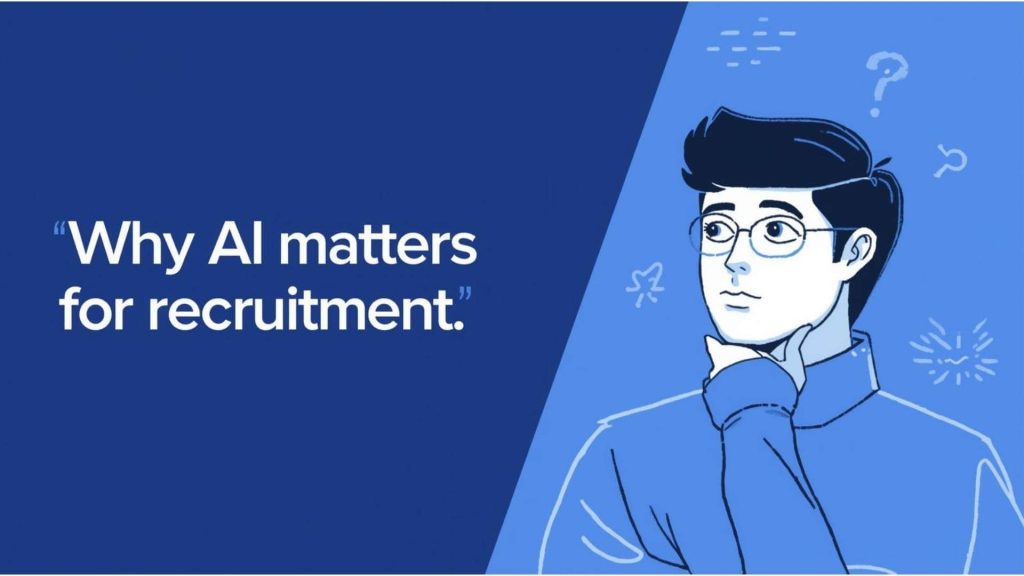
Nepal’s job market is changing fast. Cities like Kathmandu and Pokhara are producing more tech-capable graduates, startups are hiring across disciplines, and remote work means employers compete internationally. But the recruitment process in Nepal still has local friction:
- Candidate pools for specialized roles can be small.
- HR teams often spend a huge chunk of time on screening resumes and scheduling interviews.
- Small and medium-sized enterprises (SMEs) have limited HR bandwidth.
For example, TalentSathi integrates AI-powered screening and engagement tools tailored for Nepali SMEs, helping them automate early recruitment tasks, reduce manual work for recruiters, and hire efficiently without large budgets.
Real benefits for AI in HR Nepal
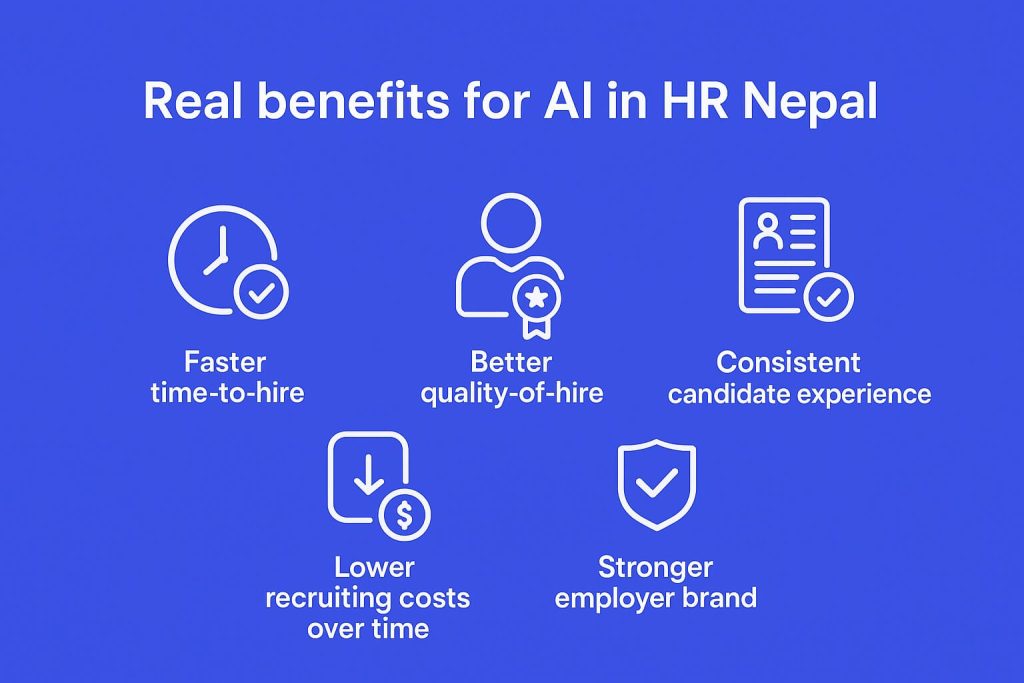
Here are the concrete ways AI and AI-driven tools help the recruitment funnel in Nepal:
- Faster time-to-hire: automate screening that used to take days which saves time for HR teams.
- Better quality-of-hire: matching candidates based on skills, experience, and job descriptions.
- Consistent candidate experience: fast replies and predictable processes.
- Lower recruiting costs over time: fewer mis-hires and less rework.
- Stronger employer brand: candidates notice a smooth, tech-enabled process.
Additionally, AI recruitment analytics and predictive models help HR professionals understand which sources bring the best candidates and which recruitment strategies are working.
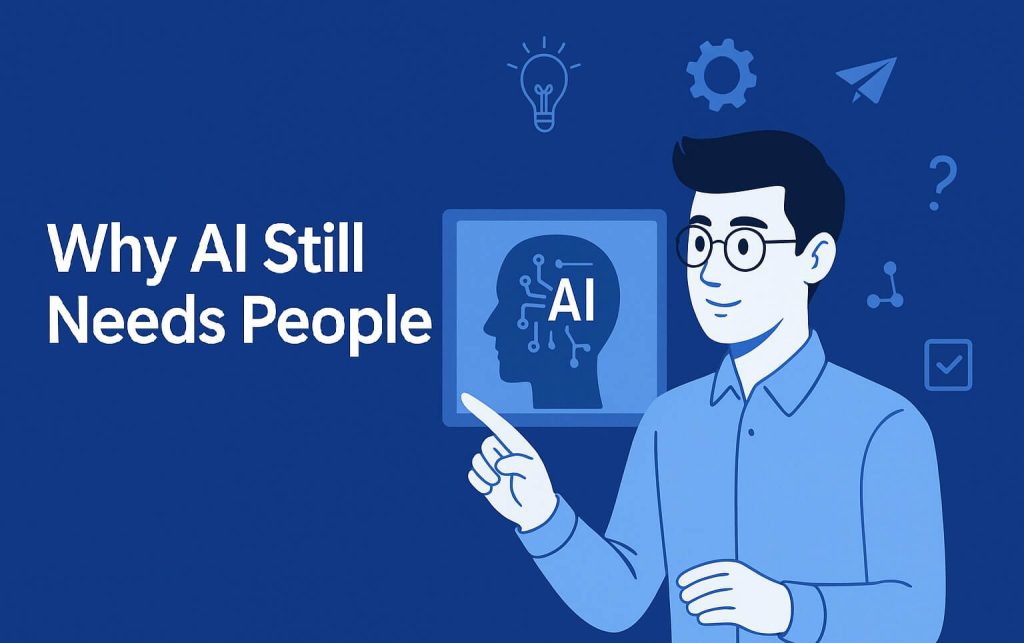
The Human Element: Why AI Still Needs People
One of the biggest misconceptions about AI recruitment is that it makes human recruiters obsolete. The truth is the opposite.
Recruiters still play crucial roles in:
- Crafting authentic job narratives.
- Building emotional connection during interviews.
- Interpreting subtle human factors – passion, creativity, resilience.
- Guiding ethical decisions and maintaining fairness.
Think of AI recruitment in Nepal not as replacing people – but as giving them superpowers.
When humans and AI collaborate, hiring becomes data-driven yet humane – fast yet fair.
In practice, AI in HR works best when AI systems handle repetitive tasks and human judgment focuses on culture, values, and long-term fit.
For understanding how companies maintain balance between tech and people, explore Best Recruitment Practices for Nepalese Employers.
Common myths – and the real truth
- Myth: AI replaces recruiters.
Truth: AI automates repetitive tasks; humans keep judgment, empathy and final decisions. - Myth: AI is only for big companies.
Truth: Affordable AI features are built into many ATS and local HR tools useful for SMEs. - Myth: AI decides everything secretly.
Truth: Good AI is explainable and should be audited – human-in-the-loop is best practice.
To learn how small and mid-sized businesses can hire effectively, check Staffing Services in Nepal: How Recruitment & Outsourcing Help Businesses Hire the Right Talent.
Quick local snapshot for AI Hiring in Nepal
- Growing interest: Nepali job boards and HR platforms increasingly offer AI features (screening, JD builders).
- Skills gap: demand for AI/ML skills exists but supply is still maturing – an opportunity for employers to upskill staff and hire strategically.
- Pilot stage: many firms test AI for specific tasks before broad adoption – start small and measure.
Who should lead AI hiring at your company?
- Talent Lead / Head of HR: sets strategy and selects pilots.
- Hiring Managers: define role needs and evaluate outcomes.
- IT / Data: integrates tools and manages data governance.
- External partner or vendor: helps run pilots and provides training if internal capacity is limited.
TalentSathi can also act as a trusted local partner for teams starting their first AI recruitment Nepal pilot.
Short, practical pilot idea (30-60 days)
- Pick: a high-volume role (e.g., customer support, junior developer).
- Choose: One AI tool focused on screening or chatbot scheduling.
- Run: AI-assisted screening for the next 50-100 applicants.
- Measure: Time-to-shortlist, number of interviews scheduled automatically, recruiter hours saved.
- Decide: Whether to expand, iterate or stop.
Tip: This minimal pilot approach is ideal for Nepali teams who want to gain confidence before committing budget.
HR Automation in Nepal on bias and fairness
- Use diverse training data or a vendor that audits for bias.
- Keep humans in the loop for final decisions.
- Track diversity metrics (gender, region, university) to spot skew.
- Be transparent with candidates about AI use in screening.
These steps reduce the risk of AI unintentionally favouring certain groups – important for ethical, legal, and reputational reasons.
How to Implement AI in Recruitment Process of Nepal: Step-by-Step
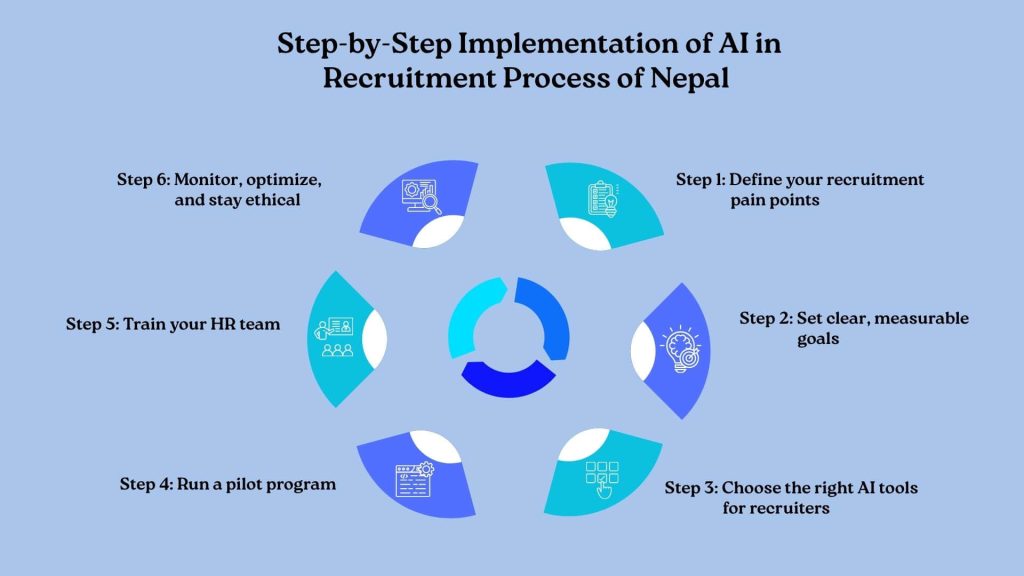
Adopting AI in HR isn’t about instantly transforming the whole hiring department overnight. The smartest organizations in Nepal begin small – learning what works and then scaling responsibly. Below is a practical roadmap designed for HR teams, SMEs, and recruitment agencies ready to bring AI recruitment in Nepal from idea to execution:
Step 1: Define your recruitment pain points
Before choosing AI tools for recruiters, identify the bottlenecks slowing down your hiring process. Some common examples:
- Too many unqualified applicants clogging up the funnel.
- Delays in shortlisting or scheduling interviews.
- Inconsistent candidate communication.
- Difficulty in evaluating cultural fit or predicting retention.
Note: Write these down – they become your AI use cases.
For example:
“We want to use AI to screen CVs faster, reduce human bias, and streamline the recruitment process.”
That clarity helps you later pick the right solution, not just the most hyped one.
For improving applicant quality, Top Recruitment Agencies in Nepal: How to Choose the Best One? offers expert-based selection tips.
Step 2: Set clear, measurable goals
AI in HR is a tool, not a miracle. You’ll need KPIs (Key Performance Indicators) to measure progress. Here are a few examples:
| Goal | KPI | Baseline | Target after AI |
| Faster shortlisting | Average screening time | 3 days | < 1 day |
| Cost efficiency | Cost per hire | NPR 30,000 | NPR 20,000 |
| Candidate experience | Avg. response time | 48 hrs | < 2 hrs |
| Retention rate | 6-month stay rate | 75% | 85% |
When you can quantify improvements, you can justify the investment in AI recruitment and continuously refine your recruitment process.
Step 3: Choose the right AI tools for recruiters
The AI recruitment market is full of global and regional options – but the best tool depends on your budget, hiring volume, and tech setup.
Here’s a quick categorized list of popular AI tools for recruiters:
1. Applicant Tracking + AI Screening
- These AI-based applicant tracking systems use machine learning to parse CVs, rank candidates based on skills, and match them with job descriptions.
Example: Workable, Manatal, Zoho Recruit, HireVue
2. AI Chatbots & Candidate Engagement
- AI chatbots can automate candidate FAQs, schedule interviews, and follow up through WhatsApp or Messenger, so recruiters spend more time on strategic conversations.
Example: Paradox Olivia, Humanly, Espressive
3. Video Interview Analysis
- Assess soft skills, tone, and personality indicators through AI-powered video analytics and predictive analytics tools.
Example: HireVue, myInterview, Retorio
4. Local or Regional Platforms
- Emerging HR tech startups in Nepal are also integrating AI features such as smart resume parsing and candidate scoring.
Example : Vocal Panda
When selecting a tool, consider:
- Integration with your existing HR software.
- Data privacy compliance (especially if dealing with EU or global candidates).
- Transparent algorithms – avoid “black box” scoring systems.
- Local support or easy online training.
Step 4: Run a pilot program
Start with one department or job category. For instance:
- Try AI screening for marketing interns.
- Use a chatbot for customer service applications.
- Test predictive analytics for developer hiring.
Collect data for 4-6 weeks.
Track time saved, response rate, and quality of shortlisted candidates.
After this period, gather feedback:
- Recruiters: did it reduce manual effort?
- Candidates: did they feel communication was clear and human-like?
- Management: did metrics improve?
If results are positive, expand gradually. If not, tweak the process – not every tool fits every culture.
To understand how outsourcing compliments AI pilots, see Staffing Services in Nepal: How Recruitment & Outsourcing Help Businesses Hire the Right Talent.
Step 5: Train your HR team
No AI tool works well without skilled humans guiding it. HR professionals need to understand:
- What the system does and doesn’t do.
- How to interpret AI-based recommendations.
- When to override automated suggestions.
- Ethical and privacy considerations.
Encourage a “co-pilot” mindset: AI assists, humans decide.
You can even organize short internal workshops or partner with training institutes offering AI for HR Nepal courses.
Step 6: Monitor, optimize, and stay ethical
Once implemented, continuously measure:
- Time-to-hire
- Source effectiveness
- Candidate satisfaction
- Bias audits
Also, keep these ethical pillars strong:
- Transparency: inform candidates if AI tools are used in the process.
- Fairness: check regularly for unintended bias (gender, age, region).
- Data privacy: follow Nepali labor laws and, if relevant, GDPR standards for global hires.
- Accountability: ensure humans have final say on hiring.
An ethical AI recruitment system builds trust – both internally and externally.
Future for the use of AI in HR Nepal
The wave of AI transformation in HR has just begun. Over the next few years, expect these future trends in how AI changes the role of AI in recruitment and HR in Nepal:
- Voice and video-based interviews with emotional analytics
Tools that read tone, microexpressions, and confidence levels in candidate responses. - AI-generated job descriptions and outreach messages
Natural language tools can help HR write inclusive, keyword-rich JDs that attract better applicants. - Predictive employee success modeling
AI algorithms predicting future performance based on skills, learning adaptability, and behavioral patterns. - Integration with HR analytics dashboards
Unified dashboards combining recruitment, performance, and retention data for holistic workforce planning.
For Nepali companies, this means:
Early adopters gain an edge – better candidate experience, faster hiring, and smarter workforce planning.
Practical Tips For the Use of AI in HR
Here’s a condensed checklist you can literally paste into your HR action plan:
- Audit your current recruitment workflow
- Identify repetitive pain points
- Define measurable KPIs
- Choose a small pilot role
- Select a trusted AI recruitment platform
- Train your HR team
- Communicate transparently with candidates
- Measure, improve, and scale
Remember: Small consistent steps create large competitive advantages.
To complement AI-driven workflow improvements, see Recruitment Mistakes in Nepal: How Companies Can Improve Their Hiring Process.
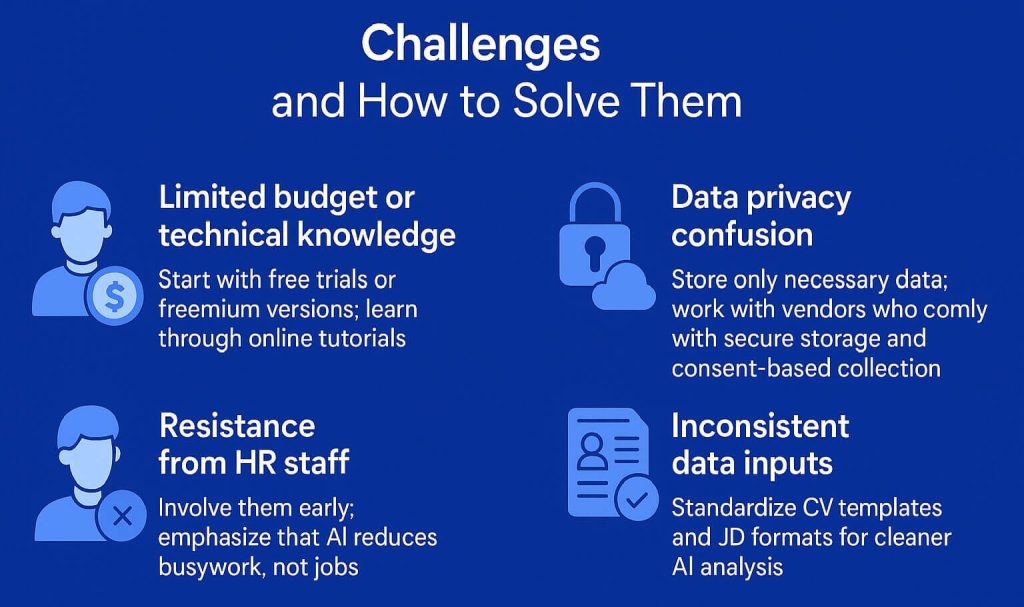
Challenges You Might Face (and How to Solve Them)
- Limited budget or technical knowledge
-> Start with free trials or freemium versions; learn through online tutorials. - Data privacy confusion
-> Store only necessary data; work with vendors who comply with secure storage and consent-based collection. - Resistance from HR staff
-> Involve them early; emphasize that AI reduces busywork, not jobs. - Inconsistent data inputs
-> Standardize CV templates and JD formats for cleaner AI analysis.
Facing these early ensures smoother adoption later.
Why AI Recruitment in Nepal Matters More Now Than Ever
Nepal’s workforce is becoming hybrid and remote-ready. Global hiring competition means employers must respond fast and choose wisely. Candidates also expect smooth, transparent, and digital-first hiring experiences.
Implementing use of AI in recruitment process of Nepal helps:
- Scale hiring without burning out teams.
- Attract top talent faster.
- Make data-backed, unbiased decisions.
- Build stronger employer reputation in an increasingly digital world.
Final Thoughts: The Smarter Future of Hiring
AI isn’t here to take over recruitment; instead, it’s here to upgrade it.
From screening to onboarding and automation to analytics, AI enables companies in Nepal to hire with speed, accuracy, and empathy. The organizations that act today will lead tomorrow’s job market.
So if your HR inbox feels endless and hiring feels harder every year -maybe it’s time to bring in a new team member. Not a human this time, but your first AI-powered recruitment assistant – platforms like TalentSathi make this possible for Nepali businesses.
For related HR & recruitment insights, check:
8-Step Guide for Recruitment Process in Nepal
Why Choose a Recruitment Company in Nepal for Your Business in 2026?
FAQs
What are the benefits of AI recruitment in Nepal?
Faster screening, lower recruitment costs, better candidate experience, and up to 60 percent time savings for Nepali HR teams throughout the hiring process.
How can Nepali companies begin using AI for hiring?
Start small: pick one role, use a simple AI recruitment tool, set clear goals, train your HR team, test the results, and then scale if it works.
Which AI tools are suitable for Nepali HR teams?
Use AI-based ATS, chatbots, and analytics with English/Nepali support and local integration.
Are there risks when using AI in hiring in Nepal?
Yes – bias, data privacy, low transparency, and weak infrastructure remain key issues.
What does the future of AI hiring look like for Nepali businesses?
Expect video/voice analytics, predictive hiring, and smarter, data-driven HR systems.
How is AI changing the recruitment process in Nepal?
AI helps in automating CV screening, scheduling, and matching – reducing time-to-hire and improving hire quality.