Hiring the right people has become one of the biggest challenges for growing companies in Nepal. Whether your business is based in Kathmandu, Lalitpur, Pokhara, or expanding into other cities, relying only on short-term or contract workers often creates instability. This is why many organizations are now shifting toward direct hire in Nepal as a long-term recruitment strategy.
Direct hiring focuses on building permanent teams instead of filling gaps temporarily. It allows companies to retain talent, improve productivity, and create a stronger workplace culture.
This guide explains what direct hire means in Nepal, how it compares with contract hiring, its benefits for employers and job seekers, and how companies can implement an effective direct hiring process.
What Is Direct Hire in Nepal?

Direct hire in Nepal means recruiting an employee as a full-time, permanent staff member who joins your organization from day one. The employee is placed directly on your company payroll and works under your management, policies, and long-term goals.
Unlike temporary or contract staffing, direct hiring does not involve third-party payroll or fixed-duration agreements. The employee becomes part of your internal team and grows with your organization.
Direct hiring is part of a broader recruitment workflow that includes planning, sourcing, screening, interviewing, and onboarding, as explained in our 8-step recruitment process in Nepal, which outlines how employers can structure hiring more effectively.
Direct Hire vs Contract Hiring in Nepal
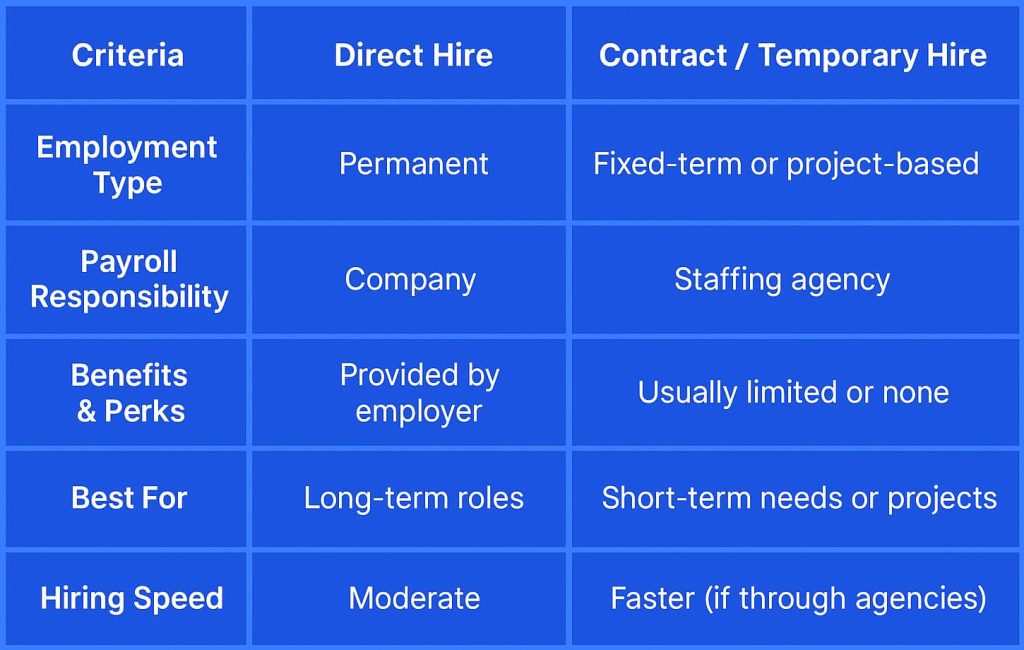
Both hiring models are used in Nepal, but they serve different purposes.
Contract Hiring Works Best When:
- You need short-term project support
- Workload fluctuates seasonally
- The role does not require long-term continuity
- You want quick, temporary assistance
Direct Hiring Works Best When:
- You need long-term stability and accountability
- The role involves sensitive data or leadership responsibilities
- Company culture and collaboration matter
- You want to reduce employee turnover
Many companies evaluate different staffing services in Nepal before deciding whether to hire contract staff or invest in permanent recruitment. While contract hiring can solve immediate needs, direct employment in Nepal delivers stronger long-term value.
For further reference on the pros and cons of direct hire and contract employment models, the Society for Human Resource Management (SHRM) provides an expert comparison of permanent vs temporary staffing practices.
Why Direct Hire Is Becoming Popular in Nepal
As competition for skilled professionals increases, employers are realizing that permanent recruitment creates more sustainable teams.
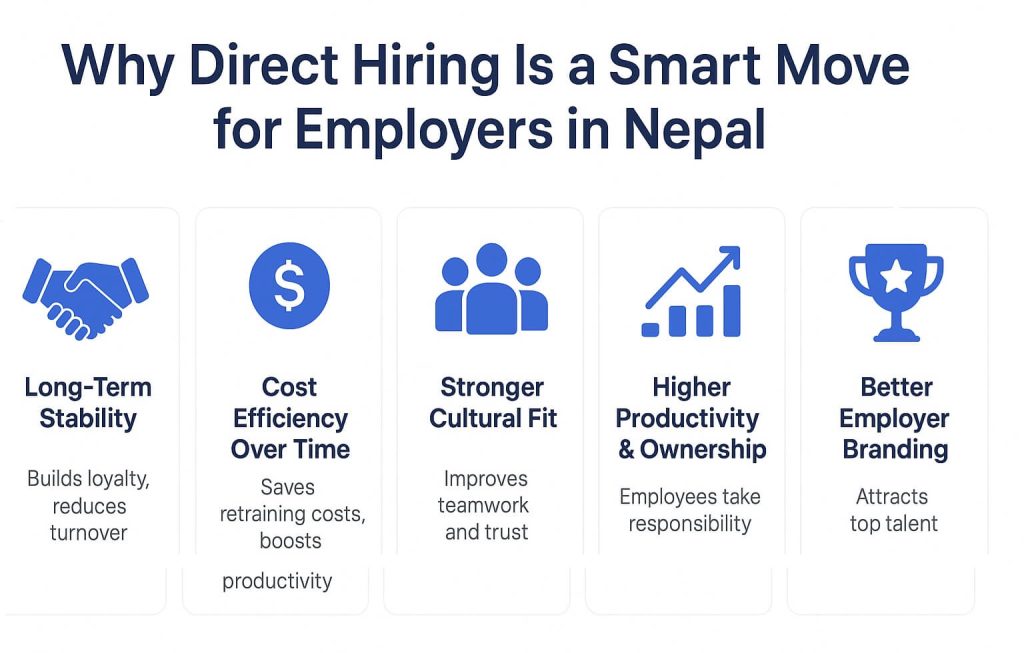
Long-Term Stability and Employee Loyalty
Permanent employees feel more secure and committed. In Nepal, where job switching is common due to salary competition and overseas opportunities, direct hiring helps reduce attrition.
Employees who feel valued are more likely to stay, improve their skills, and contribute consistently.
Cost Efficiency Over Time
Although direct hiring may seem expensive initially, it reduces long-term costs related to:
- Frequent rehiring
- Repeated onboarding
- Training new employees
- Productivity loss due to turnover
Companies that adopt permanent staffing in Nepal often find that stable teams perform better and require fewer replacements.
Stronger Cultural Fit and Collaboration
Nepali workplaces rely heavily on teamwork, trust, and communication. These qualities are difficult to develop with temporary staff.
Direct hires:
- Align better with company values
- Communicate more openly
- Take responsibility for outcomes
- Collaborate effectively across teams
Organizations that invest in long-term hiring also strengthen their employer branding in Nepal, making it easier to attract serious candidates.
Higher Productivity and Ownership
Permanent employees think beyond daily tasks. They suggest improvements, take initiative, and support business growth.
This ownership mindset is a key reason why companies moving toward structured hiring systems see better results, especially when they follow best recruitment practices in Nepal.
Benefits of Direct Hire for Job Seekers in Nepal
Direct hiring does not benefit employers alone. It is also the most preferred model for many professionals.
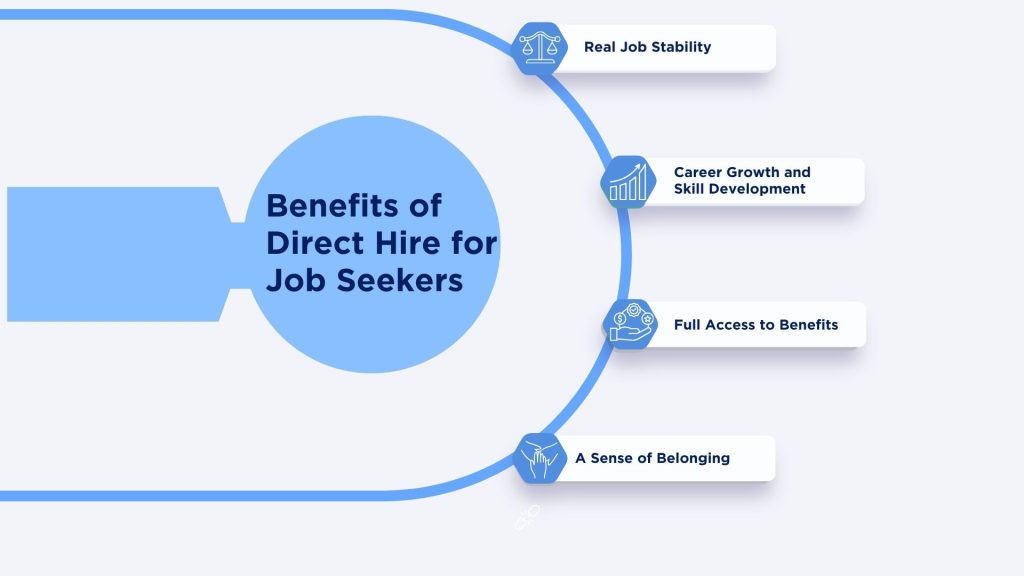
Job Security and Stability
Permanent roles provide clarity, predictable income, and long-term security.
Career Growth and Skill Development
Direct hires receive better training, performance feedback, and promotion opportunities compared to contract workers.
Access to Benefits
Full-time employees often receive:
- Paid leave
- Festival bonuses
- SSF contributions
- Health or insurance benefits
- Structured HR support
This is why permanent recruitment in Nepal is beautiful for skilled professionals.
Step-by-Step Direct Hiring Process in Nepal
A structured process improves hiring quality and reduces mistakes.
Role and Needs Assessment
Define responsibilities, required skills, and performance expectations clearly.
Poorly defined roles often lead to hiring mismatches and early resignations.
Talent Sourcing
Effective sourcing channels include:
- Job portals
- Employee referrals
- Company career pages
- Recruitment agencies
Many employers highlight that the role is a direct hire position to attract candidates seeking long-term stability.
Screening and Interviews
Shortlisting should include resume screening, skill verification, and structured interviews.
Unstructured hiring is one of the most common recruitment mistakes Nepali companies make, leading to poor hiring decisions.
Offer Letter and Employment Contract
Once selected, move quickly with an offer. Competitive candidates often receive multiple offers.
Employment contracts must comply with Nepal’s labour regulations, which are explained in detail in our Labour Act 2074 compliance guide.
Onboarding and Integration
The first 90 days are critical. Strong onboarding includes orientation, training, performance goals, and regular check-ins.
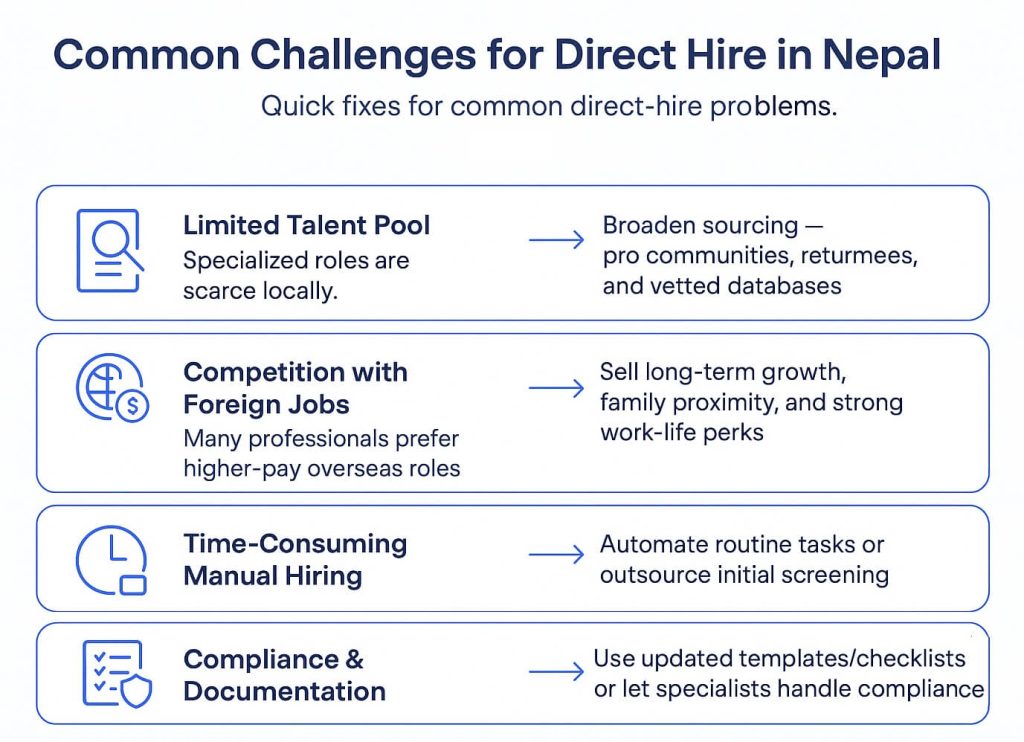
Common Challenges in Direct Hire and How to Solve Them
Limited Talent Pool
Solution: Expand sourcing channels and partner with recruitment specialists.
Competition from Foreign and Remote Job
Solution: Emphasize growth opportunities, leadership roles, and work-life balance.
Slow Hiring Process
Solution: Use structured workflows and involve decision-makers early.
Compliance Issues
Solution: Follow standard HR policies or seek professional recruitment support.
Companies often compare in-house HR vs recruitment agencies in Nepal to decide how to manage these challenges effectively.
How TalentSathi Supports Direct Hiring in Nepal
TalentSathi helps companies hire permanent employees efficiently and compliantly.
What We Offer:
- Access to vetted talent across Nepal
- Local market knowledge with global hiring standards
- End-to-end recruitment support
- Assistance with documentation and onboarding
Our approach supports long-term hiring success, not just vacancy filling.
Conclusion: Is Direct Hire the Right Choice for Your Company?
Direct hire in Nepal is more than a hiring method, it is a long-term business strategy.
A successful direct hire:
- Reduces turnover
- Improves performance
- Strengthens company culture
- Builds internal expertise
In a competitive job market, companies that invest in permanent recruitment gain stability and trust, both internally and externally.
If your goal is to build a reliable and scalable workforce, direct hiring in Nepal is the most sustainable path forward.
Frequently Asked Questions (FAQs)
What does direct hire mean in Nepal
It means hiring someone directly onto your company payroll for a permanent, full-time role.
Is direct hire the same as permanent staffing
Yes, both refer to long-term employment with full company benefits.
When should companies choose contract hiring instead
When the requirement is temporary, seasonal, or project-based.
How does direct hiring reduce turnover
Permanent roles offer stability, support, and career growth, leading to higher employee loyalty.
How long does the direct hiring process take in Nepal
General roles take 2 to 4 weeks. Niche roles take longer depending on candidate availability.
How does TalentSathi help with direct hiring
TalentSathi handles sourcing, screening, compliance, and onboarding assistance for employers across Nepal.