Introduction
HR planning in Nepal used to mean one thing for most companies: “We’ll hire when someone resigns.” As long as there was someone to handle attendance, payroll, and the odd vacancy announcement, management felt HR was “handled.”
However, that is no longer an effective approach.
Organisations today are experiencing talent shortage, brain drain, stiffness in competitive areas and increasing customer and employee demands. In that regard, HR planning in Nepal is no longer about counting the number of manpower, but a more strategic role: anticipating future hiring requirements, strategy, and matching manpower with business objectives.
What Is Human Resource Planning?
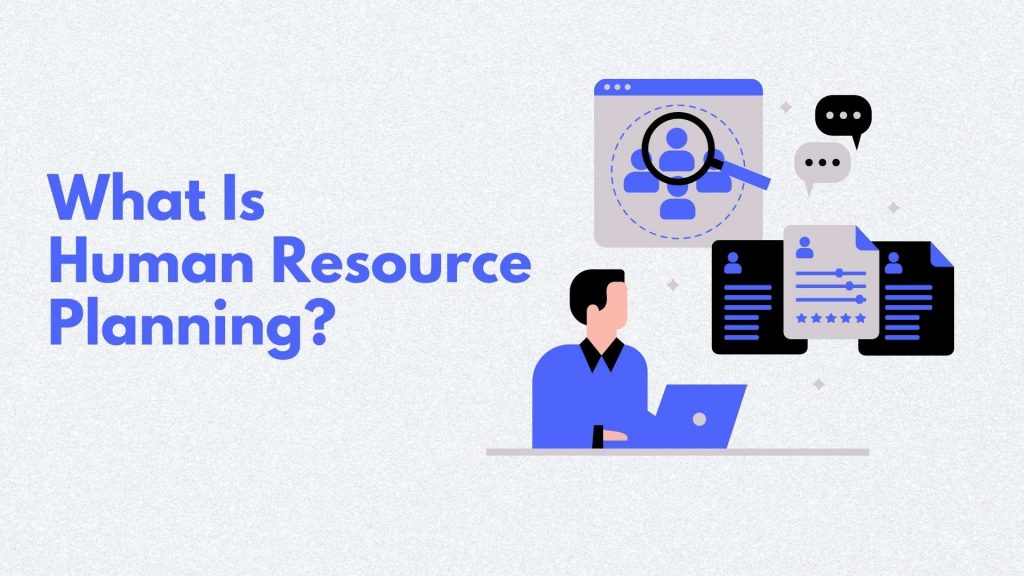
Human Resource Planning is a structured process of ensuring that an organisation has the right number of employees, with the right skills, at the right time, and at the right cost.
In Nepal’s context, HRP also includes planning around:
- high turnover trends
- skill shortages in emerging sectors
- salary competition
- employee migration
- seasonality in tourism, retail, education, agriculture
- regional staffing challenges in remote area
Why Forecasting Hiring Needs Is Critical for Nepali Companies
The workforce planning in Nepal revolves around forecasting. Through it, firms can make HR a strategic benefit.
Avoiding talent shortages and overstaffing
A clear hiring forecast for Nepal helps you see where you might be short or overstaffed:
- You can identify roles where resignations are frequent.
- You can guess when the workload may increase because of a project or sales targets.
- You can make the decision of full-time, part-time, contract, or outsource.
This reduces the constant “urgent vacancy” situation and avoids paying for more staff than necessary.
Managing costs in a price-sensitive market
Every additional hire means:
- Salary
- Benefits
- Training
- Management time
In Nepal’s price-sensitive market, companies must use their HR budget carefully. Forecasting helps:
- Reduce costly last-minute hires
- Avoid redundant roles
- Plan training instead of immediately hiring externally
When leadership sees HR bring cost control and predictability, HR is taken more seriously at the strategy table.
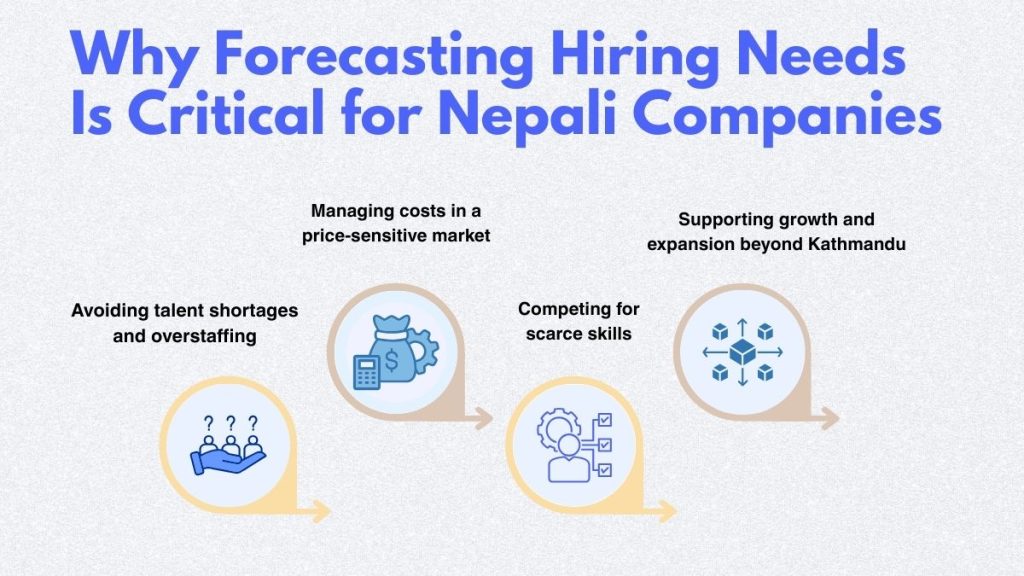
Competing for scarce skills
In fields like IT, engineering, healthcare, finance, and even modern marketing, talent is scarce. If you wait until you “desperately” need someone, you will:
- Pay more than necessary
- Compromise on quality
- Wait longer to fill the position
A proactive hiring forecast Nepal allows you to:
- Build a pipeline of potential candidates
- Strengthen employer branding in advance
- Start conversations with universities or training partners early
Supporting growth and expansion beyond Kathmandu
With the growth of companies to cities such as Pokhara, Butwal, Chitwan, Biratnagar, Itahari, or other cities, new workforce dynamics are being experienced. There is a difference in local talent availability, salary expectations and competition.
HR planning Nepal can help answer:
- How many people will we need to open a new branch in City X?
- What mix of local hires and transfers is realistic?
- Which roles should be central vs. local?
Instead of guessing, leaders can base growth decisions on realistic staffing plans.
The HR Planning Process: Step-by-Step (Nepal Context)
You don’t need a complicated system to get started. A simple, clear process can make HR planning in Nepal manageable and effective.
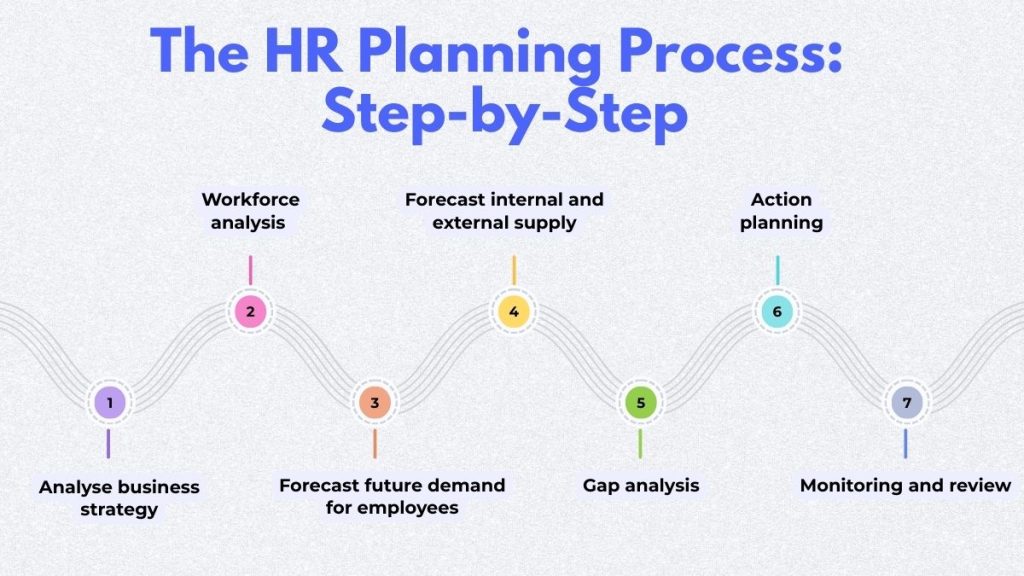
Step 1: Analyse business strategy
Start by understanding where the business is going:
- Is it planned to open new branches?
- Is there a launch of new services or products?
- Do you have significant projects in the 6-12 months?
- Does it anticipate peak periods of the company? (festivals, tourist season, academic admissions, etc.)
HR should actively talk to leadership and department heads, not wait for them to “inform HR later.”
Step 2: Workforce analysis
Next, map your current workforce:
- How many employees are there in each department and location?
- What are their job titles and skills?
- How many are on permanent, contract, or part-time arrangements?
- What is the age and retirement profile?
- What are the most important business continuity roles?
Even a well-maintained Excel sheet can give a powerful view of your current capacity.
Step 3: Forecast future demand for employees
Reflecting on the business strategy and the existing workforce, estimate future demand:
- What will be the number of new positions required?
- What are the most important skills (for example, digital marketing, data analysis, and certain technical skills)?
- Which departments will need to grow, and which might remain stable?
Separate your demand forecast into:
- Short-term (0–1 year): confirmed projects, planned branch openings, predictable retirements.
- Medium to long-term (3–5 years): strategic expansion, new technology adoption, long-term contracts.
This step is at the core of workforce planning in Nepal.
Step 4: Forecast internal and external supply
Now determine how much of that demand you may supply out of yourself–and how much of it you must supply externally.
- Internal supply
- Employees ready for promotion
- People who can be transferred or rotated
- Employees who are trainable for new positions.
- Employees ready for promotion
- External supply
- Availability of talent in the local job market
- College, University and training institute graduates.
- Potential of recruiting experienced migrants who have worked overseas.
- Availability of talent in the local job market
Step 5: Gap analysis
Compare forecasted demand with supply:
- Where will you have shortages?
- Where might you have more staff than needed?
- Which skills are missing completely?
This gap analysis is the “bridge” that directs your recruitment, training, and restructuring decisions.
Step 6: Action planning
Depending on the gaps, make decisions on what to do:
- Recruitment strategies (quantities, positions, deadlines, applications)
- Training and upskilling programs
- Succession planning for critical roles
- Contract personnel or outsourcing of non-core business.
- Redeploying or retraining redundant employees.
This is where a hiring forecast in Nepal becomes a concrete action plan.
Step 7: Monitoring and review
HR planning is not “once and done.” Markets evolve, people resign without any prior notice, and projects are postponed or fast-tracked.
- Review your HR plan once every quarter or, at least, twice a year.
- Monitor important measures: hires against plan, turnover, time-to-fill, training completion
- Reporting assumption based on actual data and new business data.
In the long run, your HR planning process will be more precise and relied upon.
Practical Techniques to Forecast Hiring Needs
You don’t need advanced statistics to create a workable hiring forecast in Nepal. Most HR teams can use these simple techniques.
Managerial judgment / bottom-up forecasting
Ask department heads to estimate:
- How many people they currently have
- How much workload they expect next year
- How many additional people they think they’ll need
These estimates, when guided by clear questions and historical data, are a strong starting point.
Ratio analysis
Use ratios like:
- Number of customer service staff per 1,000 customers
- Number of sales staff per region or product line
- HR staff per 50 or 100 employees
These ratios can be multiplied to give you a forecast of new employees if the business intends to expand the number of customers or regions
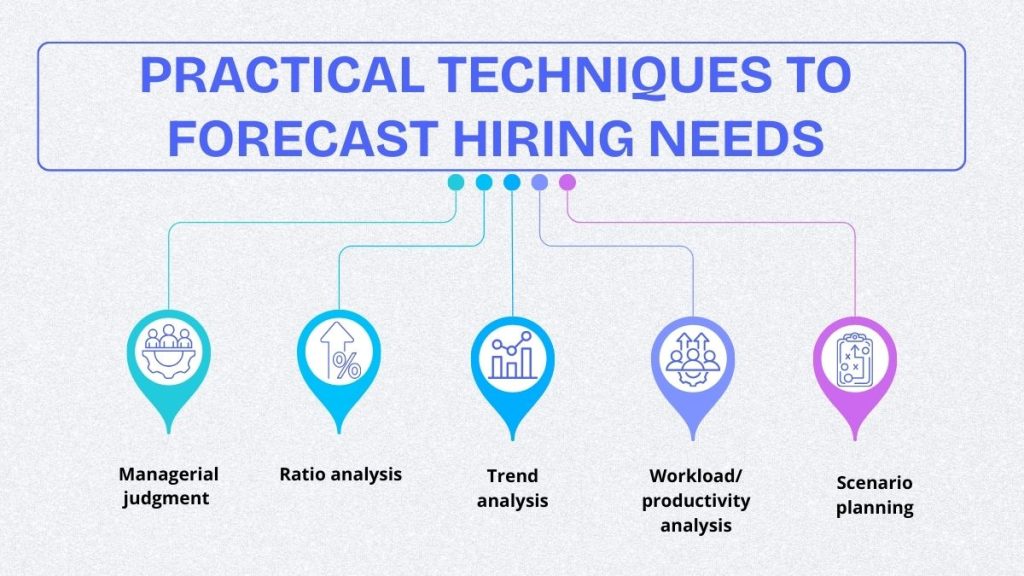
Trend analysis
Look at the last 3–5 years:
- How many people did you hire each year?
- What was your turnover rate?
- How fast did your revenue or client base grow?
These patterns can be used to forecast future staffing requirements. It is not flawless, but it is enhanced as compared to just making guesses.
Workload/productivity analysis
For some roles, you can calculate needs based on workload:
- Average number of calls per call center agent
- Average number of patients per doctor or nurse
- Average number of tickets handled per IT support agent
Assuming that the workload will grow by a percentage, you can predict the number of additional people.
Scenario planning
Nepal is a country where the economy and political situation shift rapidly. Scenario planning assists you in planning:
- Best-case scenario: good growth, various new projects.
- Most likely scenario: moderate growth, planned expansions
- Worst-case scenario: reduced growth, postponed projects.
In every situation, calculate various rates of hiring requirements. This gives leadership options and flexibility.
Data Needed for Better Forecasts (and Typical Gaps in Nepal)
Forecasts are only as good as the data behind them. For effective workforce planning Nepal, HR teams should focus on a few key data sets.
Internal HR data
Useful internal data includes:
- Current headcount by department and role
- Historical employee count (how many employees you had each year)
- Hires and exits per year.
- Turnover rates by department
- Promotion and internal movement data
- Absenteeism and overtime records
- Payroll and salary band information
You don’t need a perfect HRIS to start. Clean, organized spreadsheets can already add value.
External data
External data helps you understand the broader labour market:
- Government labour statistics
- Reporting on industry-based hiring trends and remuneration rates
- Experiences of job portals and recruitment agencies.
- Feedback from universities and training institutes
This aids you in evaluating the ease or the difficulty of locating some form of talent.
Typical data gaps in Nepal
Common issues seen in many companies:
- HR data scattered across multiple files and registers
- Inconsistent job titles and grade structures
- Lack of reliable exit reasons
- No central system to view headcount by branch or department
These issues make HR planning in Nepal harder but not impossible. It all depends on starting to get better.
Practical tips for better data
- Agree on standard job titles and levels
- Have a central database of employees (even on excel)
- Regularly update employee movements, promotions, and exits
- Capture exit reasons systematically
- Start basic dashboards for headcount and turnover
This base will make it easier to make predictions in the long run.
Nepal-Specific Factors That Influence Workforce Needs
The labour market of every country is different. Workforce planning in Nepal must take local realities into account.
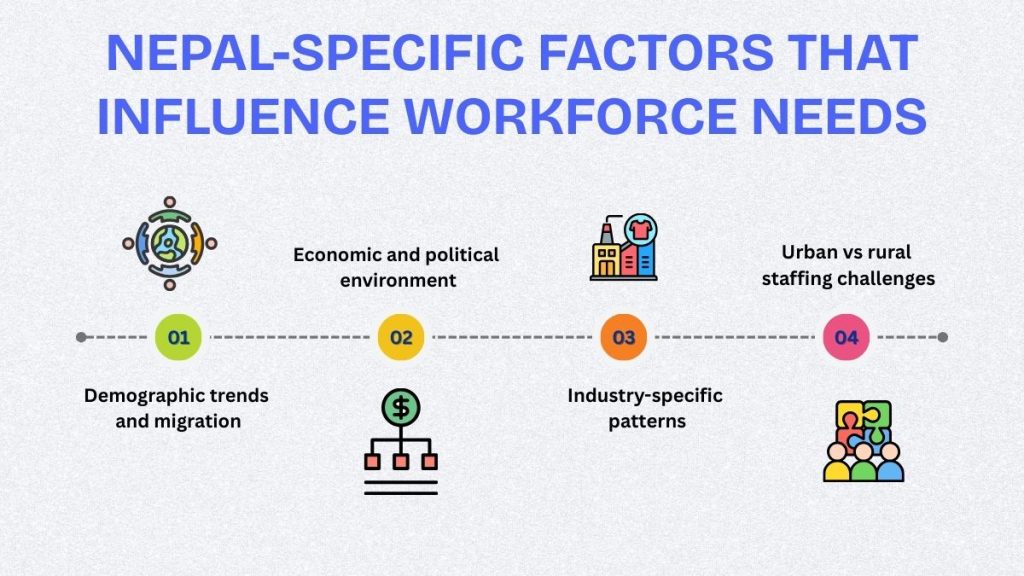
Demographic trends and migration
Nepal has a young population, but a large number of young and skilled professionals migrate to other countries seeking employment. This affects:
- Availability of mid-level and skilled professionals
- Turnover in certain sectors
- The importance of attracting returnee talent
HRP ought to consider roles that are most difficult to retain and areas that have the greatest risks of migration.
Economic and political environment
Changes in government policy, taxation, labour laws, and foreign investment directly impact hiring:
- Strict or unclear labour rules may discourage formal hiring
- Policy stability or instability affects long-term planning
- Large infrastructure or development projects can create sudden demand for certain skills
HR needs to stay informed and factor these elements into the hiring forecast for Nepal.
Industry-specific patterns
Demand for talent varies by sector:
- Tourism & hospitality: strong seasonality, need for flexible staffing
- Hydropower & construction: project-based peaks and remote locations
- IT/BPO: global competition, remote work, higher turnover
- Education & healthcare: regulatory requirements, qualification standards
Each sector’s unique pattern should inform HRP.
Urban vs rural staffing challenges
For companies operating outside Kathmandu and major cities:
- It can be harder to find specialised talent locally
- Some positions might require relocation or rotation
- There may be fewer competitors, but also fewer training institutions
Linking HR Planning with Recruitment, Training, and Retention
HR planning is not isolated. Recruitment, learning and retention are the links that are brought together by it.
Recruitment and employer branding
When you possess a clear roadmap for workforce planning in Nepal, recruitment becomes:
- More tactical (planned campaigns vs emergency postings)
- Better timed (starting hiring early for hard-to-fill roles)
- More specialised (knowing which channels work best for each role)
You will be able to cooperate with the job portals, agencies, and platforms such as Sathijob in a strategized manner.
Training and development
HRP helps you decide:
- Which skills should be built internally through training
- Which skills should be hired from the market
- Where cross-training between departments can create flexibility
This reduces over-reliance on external hiring for every new skill need.
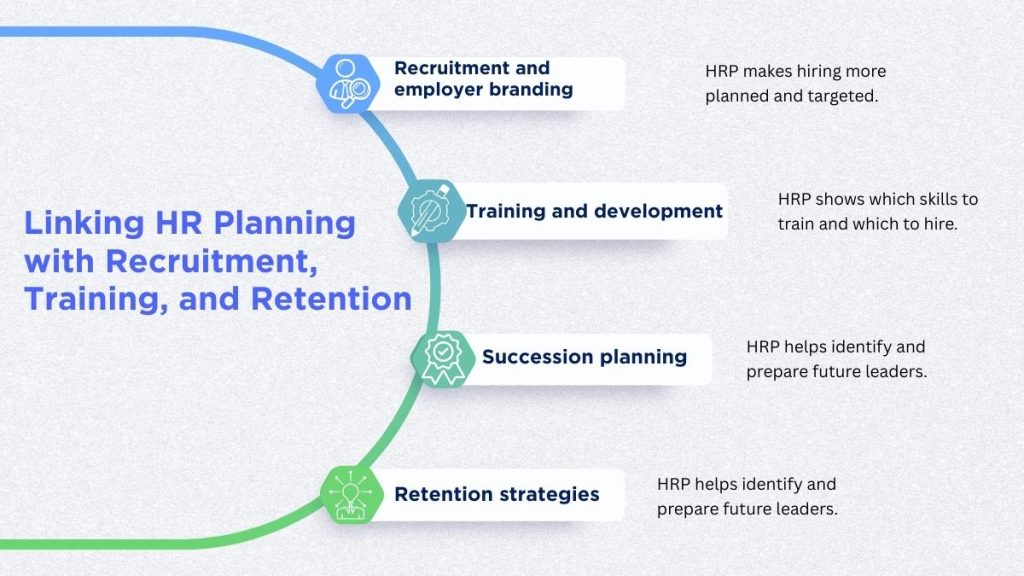
Succession planning
HRP involves the identification and preparation of future leaders:
- What are the important roles for business continuity?
- Who can be the future successors, and what development do they need?
- How many days will they need to prepare them?
With proper workforce planning, companies can follow a more strategic successful recruitment process in Nepal and avoid last-minute hiring.
Retention strategies
When you analyze gaps and turnover patterns, you can design:
- Better career paths
- Equitable and competitive pay.
- Flexible arrangement and work-life balance.
- Supportive leadership development
This helps keep critical talent within the organization longer.
Common Challenges Nepali Companies Face in HR Planning
Despite good intentions, HR planning in Nepal has challenges.
HR seen as administrative, not strategic
In many organizations:
- HR is limited to payroll, attendance, and compliance
- HR is left out of strategic discussions
- HR plans are made only after budgets are finalized
This makes it hard for HR to do meaningful long-term planning.
Lack of HRP skills and tools
HR professionals may not have formal training in:
- Forecasting
- Data analysis
- Scenario planning
- Workforce analytics
Without templates, guidance, or systems, HRP can feel overwhelming.
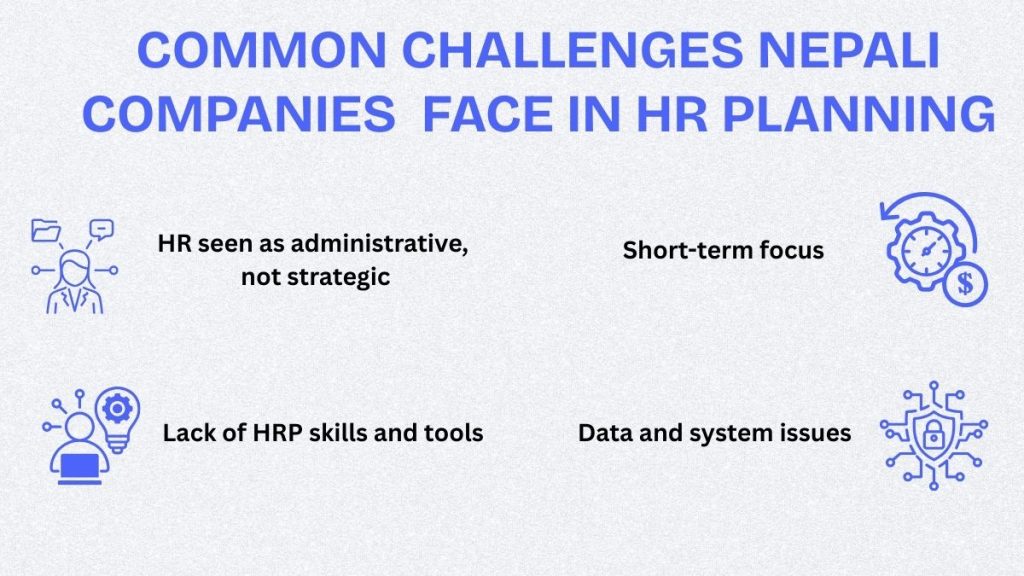
Short-term focus
Some companies:
- Only react when someone resigns
- Avoid long-term commitments to avoid “extra costs”
- Believe planning is not useful in an uncertain environment
This mindset keeps them stuck in a firefighting mode.
Data and system issues
As mentioned earlier:
- Data is fragmented and inconsistent
- There is no central HR information system
- Basic reports are difficult or time-consuming to produce
Without reliable data, leaders may not trust HR plans.
Practical Solutions and Best Practices for Nepali Companies
Despite challenges, any organisation can make progress with HR planning in Nepal by following some practical steps.
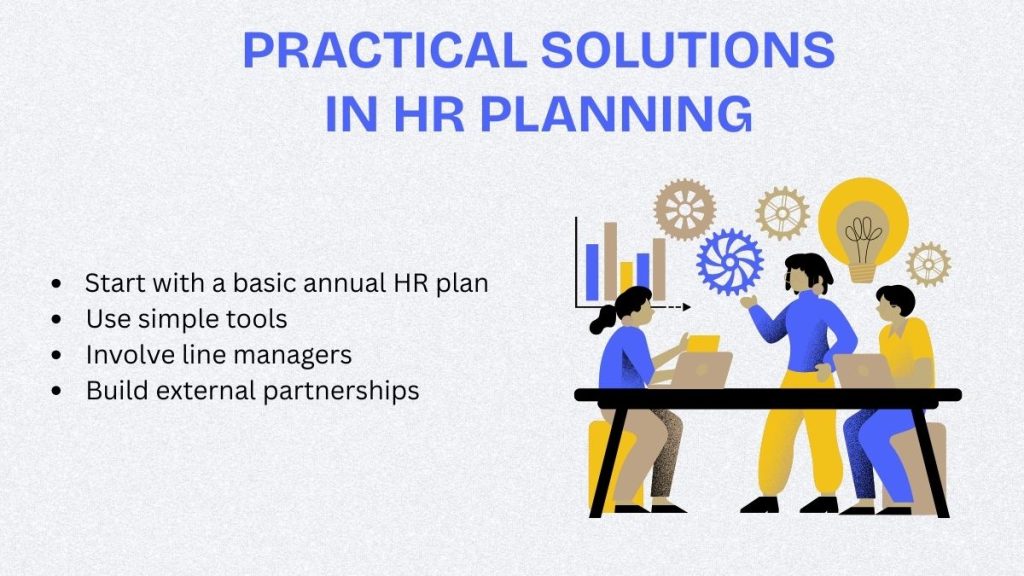
Start with a basic annual HR plan
You don’t need a perfect plan to start. Begin with:
- Forecasting headcount for the next year by department
- Identifying likely retirements and high-turnover roles
- Estimating hiring needs based on business targets
Document it, review it with management, and adjust every quarter.
Use simple tools
An effective spreadsheet is able to:
- Monitor the number of by department, location and position.
- Record hires, exits, and reasons for exit
- Visualize basic trends and ratios
As the organization grows, you can consider moving to an HR management system with more automation.
Involve line managers
Make HRP a shared responsibility:
- Train managers on basic forecasting concepts
- Ask them to provide input on future needs and risks
- Use their feedback to refine the hiring forecast Nepal
This increases buy-in and accuracy.
Build external partnerships
Work with:
- Local colleges and universities
- Training institutes
- Job portals and recruitment partners
- Platforms like TalentSathi/Sathijob for HR and recruitment talent
These partnerships help you respond to forecasted needs more efficiently.
Role of HR Data, Technology, and Simple Analytics in Forecasting Hiring Needs
HR technology and data don’t have to be complex to be useful for workforce planning Nepal.
Basic HR data that supports forecasting
Collect and track:
- Hires and exits per month
- Turnover by department and role
- Average turnaround time to vacancies.
- Absenteeism and overtime
This data lets you see patterns: where turnover is high, which roles are hard to fill, and where workload is excessive.
Using HR systems and dashboards
Even basic HR software or BI tools can:
- Centralize employee information
- Generate headcount and turnover reports
- Visualize trends with simple charts
A few key dashboards can make the hiring forecast Nepal more data-driven and convincing for management.
Benefits of data-informed HR planning
When you use data and simple analytics:
- Plans become more realistic, not just “wish lists”
- Leadership trusts HR recommendations more
- HR can have stronger conversations about budgets and priorities
Over time, this lays a foundation for more advanced HR analytics.
Conclusion
HR planning in Nepal is no longer a “nice-to-have.” In a competitive labour market with constant change, companies that invest in workforce planning in Nepal and build a realistic hiring forecast Nepal will have a clear advantage.
By aligning HR planning with recruitment, training, and retention strategies and connecting it with strong staffing practices, organizations ensure they always have the right people at the right time. This approach helps Nepali businesses stay competitive, efficient, and resilient as they grow.
FAQs
Is human resource planning only for big companies?
No.SMEs benefit most due to limited resources and costly hiring mistakes.
Can forecasting really reduce HR costs?
Yes.It helps cut emergency hiring, overtime, turnover, and training costs.
Who should be involved in HR planning?
HR, department managers, finance, and leadership teams should collaborate.
Can companies do HR planning with incomplete data?
Yes. Start with whatever data is available and improve it over time.
What simple HR planning practice can a company implement today?
Create a basic headcount plan for the next year and track monthly updates.