Nepal’s startup ecosystem has grown rapidly over the last few years. From tech and fintech to ecommerce, edtech, and health-focused startups, more founders are building scalable businesses than ever before.
While this growth brings exciting opportunities, it also creates one of the biggest operational challenges: finding the right talent at the right time.
Hiring in startups isn’t just an HR function it directly impacts customer satisfaction, team morale, and product delivery. Startups often run on tight budgets, small teams, and compressed timelines, so even a single hiring mistake can be costly.
The Startup Ecosystem and Talent Landscape in Nepal
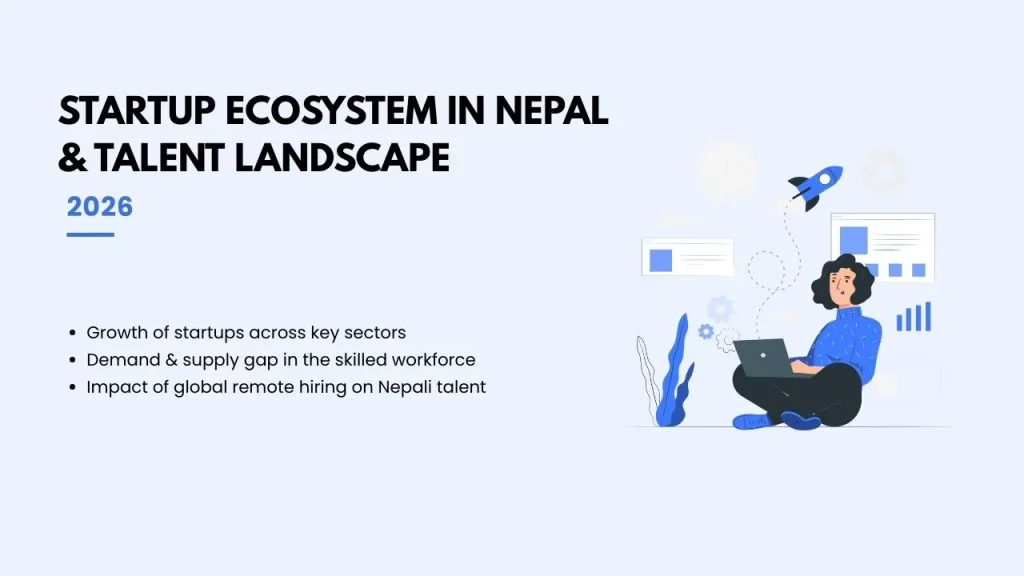
Nepal’s startup ecosystem is steadily growing, with registered ventures in technology, fintech, ecommerce, health, logistics, and digital services.
Key sector growth:
- Tech & digital services: Low entry costs, global demand.
- Fintech: Expansion via digital payments and financial inclusion.
- Ecommerce & logistics: Growing due to urbanization and smartphone adoption.
- Edtech & health tech: Serving domestic and international markets.
The Talent Gap Challenge
Even though Nepal produces many graduates every year, most aren’t fully job-ready. Startups struggle to hire employees who can thrive in fast-paced, high-pressure environments.
- Technical roles, mid-level leadership, and cross-functional operational positions are hardest to fill.
- Skill mismatch is a leading HR issue: most candidates need extensive training before contributing effectively.
Global Competition for Nepali Talent
Remote work has opened opportunities for Nepali professionals to work for global companies, often with higher pay. While this is positive for individual professionals, it increases competition for local startups.
- Startups compete locally and globally for top talent.
- Salary expectations rise due to international remote opportunities.
- Hiring becomes more strategic, highlighting the need for structured talent acquisition systems.
In case you are now evaluating hiring capacity or about to expand a team, it can help eliminate delays in the future by reviewing your hiring strategy as soon as possible. Here is our recruitment guide:
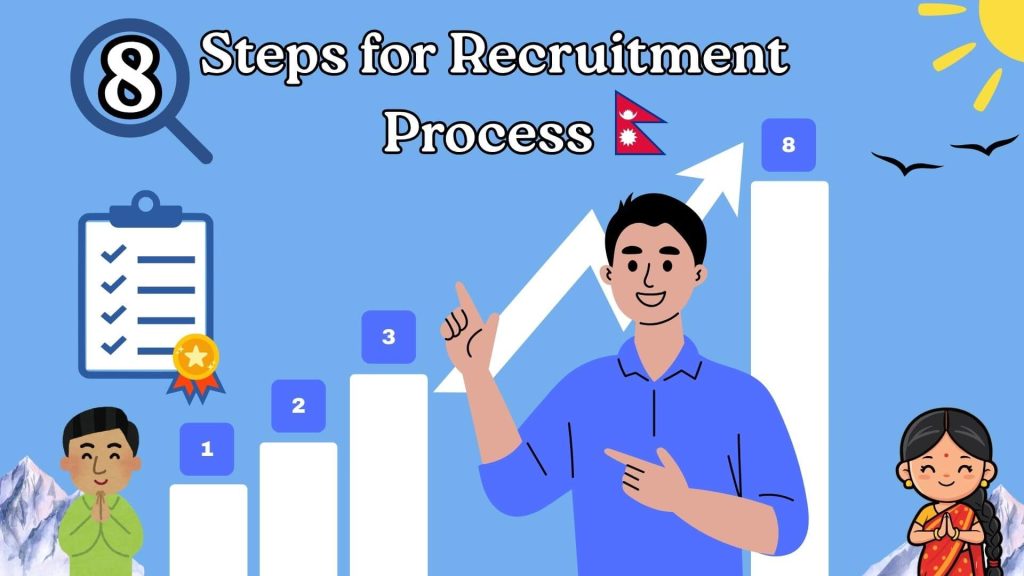
8 Simple Steps to a Successful Recruitment Process in Nepal
Top Hiring Challenges for Startups in Nepal
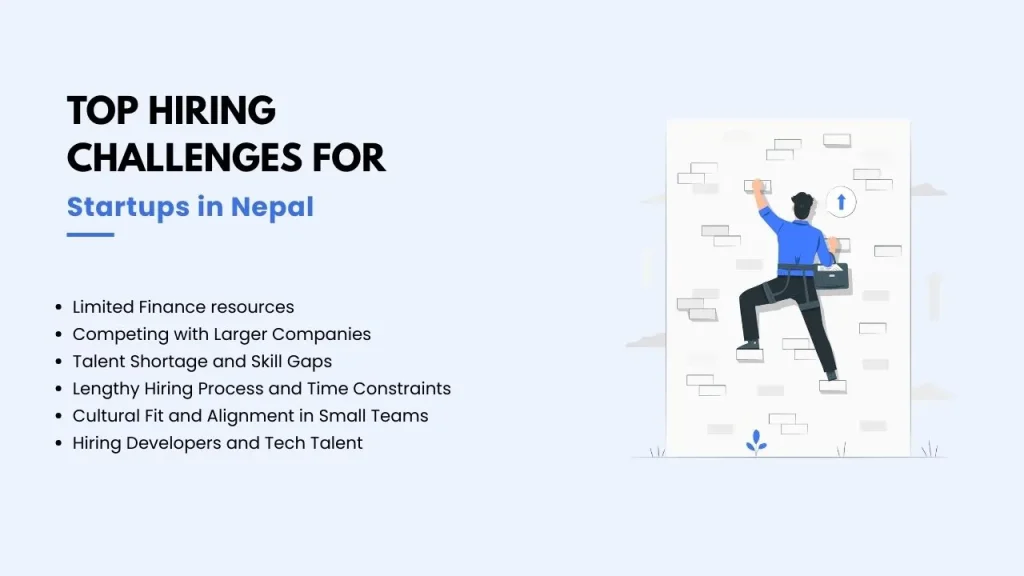
Startups face multiple hurdles when hiring, which directly affect cost, productivity, and long-term stability.
Limited Financial Resources
Early-stage startups often focus cash flow on product development, marketing, and customer acquisition. Recruitment costs and competitive salaries can quickly strain budgets.
- Difficulty keeping up with corporate pay packages
- Limited perks and benefits
- Risk of hiring junior staff instead of experienced professionals
- Costly errors from bad hires
Affordable staffing solutions and recruitment systems tailored to startups are essential.
Competing with Established Companies
Multinational and established Nepali companies offer higher pay, stability, and brand recognition, making it tough for startups to attract experienced professionals.
- Candidates prefer secure corporate roles
- Startups lack visibility in the labor market
- Employer branding is often weak
Talent Shortage and Skill Gaps
Many graduates lack practical skills and real-world project experience.
- Weak problem-solving and communication abilities
- Long training periods before productivity
- Few are willing to work in fast-paced environments
Lengthy Hiring Process
Manual resume screening, multiple unstructured interviews, and scheduling conflicts can extend hiring time to weeks or months.
- Overloads current team members
- Delays growth
- Risk of losing top candidates to competitors
Cultural Fit & Team Alignment
In small startup teams, one bad hire can disrupt morale and productivity.
- Hard to evaluate mindset during interviews
- Skills without cultural fit cause conflicts
- Higher risk of early exits
Tech Talent Shortage
Hiring software engineers, product developers, and technical leads is increasingly difficult.
- High competition among startups
- Salary expectations influenced by global remote work
- Retention challenges post-training
In case these obstacles make sense to you, you may want to evaluate your existing recruitment procedure and identify the loopholes and fast fixes. You can have a look at our guide for recruitment practices:
Best Recruitment Practices in Nepal.
Common Hiring Mistakes Startups in Nepal Make
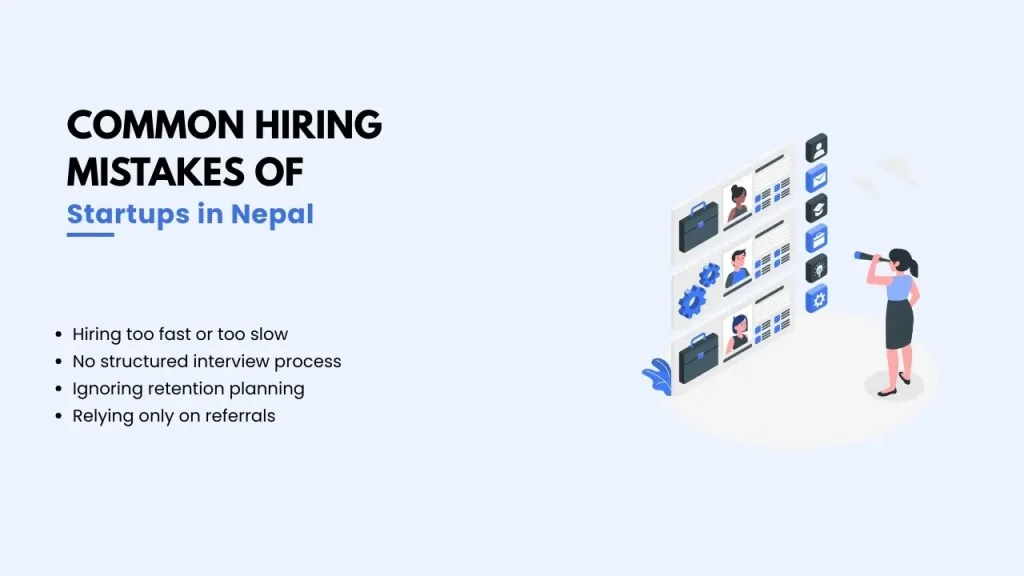
Even well-intentioned startups make avoidable mistakes:
- Rushing or delaying hires
- No structured interview process
- Ignoring retention and growth plans
- Relying solely on referrals
How Startups in Nepal Can Reduce Hiring Challenges
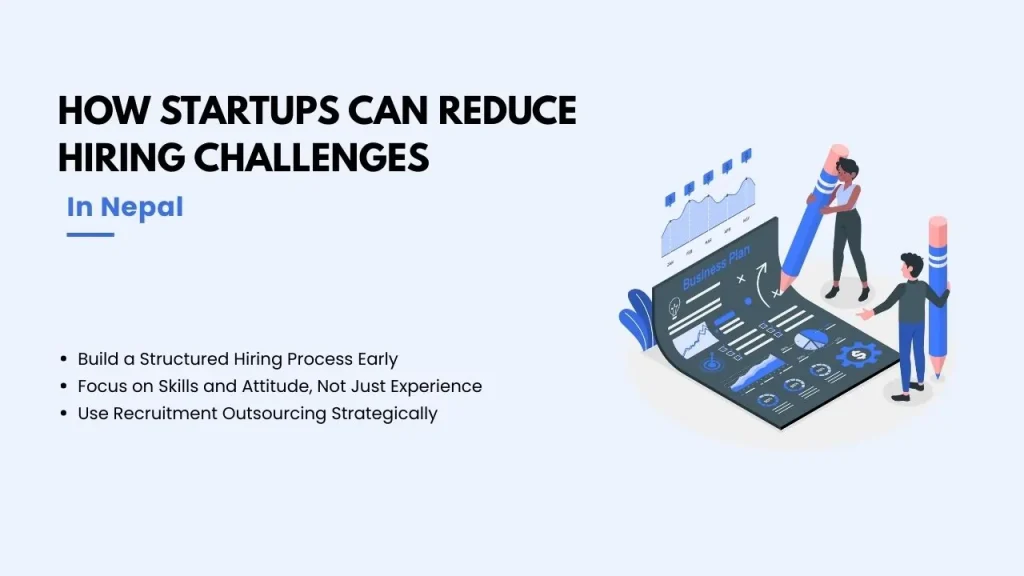
The good thing is that the majority of the hiring problems could be reduced with simple strategic adjustments. Startups do not need complex corporate systems, but they do need clarity and consistency.
The following are actions that can be undertaken by the startup founders and HR teams in Nepal.
Build a Structured Hiring Process Early
A clear process is helpful even to a small team. The ideal framework should contain
- Well-defined roles and performance indicators.
- Standard resume screening checklist.
- Regular interview phases.
- Simple scoring system of comparison.
- Quick response and time to decision.
An established procedure minimizes bias, speeds the hiring procedure, and enhances the employment experience of the candidates. It is also useful to keep track of time to recruit startups in Nepal and find out the bottlenecks.
Using templates and shared tools ensures everyone involved evaluates candidates on the same criteria.
Focus on Skills and Attitude, Not Just Experience
Startups require flexible team members than resumes. Rather than filtering by years of experience only, focus on
- Problem-solving ability
- Willingness to learn
- Ownership mindset
- Communication skills
- Alignment with startup culture.
The long-term success is enhanced by skill-based hiring. Studies on startup hiring trends show that high-potential candidates often outperform experienced hires in dynamic environments.
This can be combined with job-ready programs to enable the startup to get candidates who already have hands-on experience with tools and workflows.
Use Recruitment Outsourcing Strategically
Recruitment outsourcing in Nepal is no longer just for large companies. Specialized partners provide an advantage to startups as they already have access to filtered talent pools and established hiring processes.
Strategic outsourcing assists with:
- Quick access to skilled employees.
- Reduced internal workload
- Better screening quality
- Less expensive than full-time HR departments.
- Industry-specific hiring expertise
Instead of building everything in-house, startups can use HR outsourcing solutions for startups in Nepal to keep lean, maintaining quality hiring.
Global HR outsourcing reports have indicated that startups that outsource recruitment can save up to 40 percent on the time of hiring and increase the chances of offer acceptance.
Inline consultation note
When you are thinking of hiring more than one person, or you are feeling frustrated by time consumption, you can consult with a hiring professional to streamline your strategy. You can explore options with a 30-minute call with us.
How TalentSathi Supports Startups
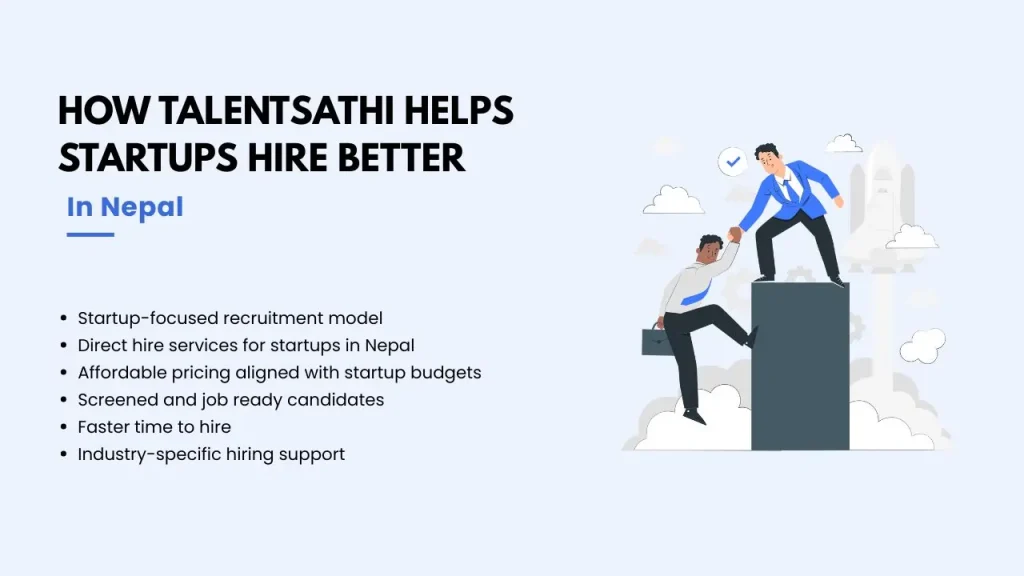
- Startup-specific recruitment model
- Direct hire services with multi-stage screening
- Affordable pricing aligned with startup budgets
- Pre-screened, job-ready candidates
- Industry-specific support for tech, business, and operations
Startup-focused recruitment model
Compared to generic recruitment agencies, TalentSathi already operates under a startup-specific model. This includes
- Learning about the startup stage and growth plans.
- Recruiting for multi-skilled roles and adaptability.
- Focusing on cultural compatibility and the sense of ownership.
- Flexible employment assistance on the basis of urgent requirements.
This method would make sure that the recruits are not only technically fit but also prepared to work in the startup conditions.
Direct hire services for startups in Nepal
Many startups prefer to build core teams through full-time hiring but struggle with sourcing and screening. TalentSathi provides direct hire services for startups in Nepal to simplify the process.
Key features include:
- JD refinement and role requirement analysis.
- Talent sourcing of the local talent.
- Multi-stage screening and interview.
- Successful profiles await shortlisting.
- Onboarding and coordination of offers.
This minimizes effort within, and only the final decision is made by start-ups.
Get to know more about direct hiring support.
Affordable pricing aligned with startup budgets
Cost is a major concern for early-stage founders. TalentSathi has set its prices in a manner that is affordable to start-ups without interfering with the quality of screening.
Benefits include:
- Transparent and performance-based fees.
- No upfront high costs
- Flexible engagement based on hiring volume
- Affordable staffing solutions for Nepalese startups
This will enable the startups to expand teams without developing financial pressure.
Screened and job-ready candidates
Filtering unprepared profiles is one of the largest time-wasting activities in hiring startups. TalentSathi specializes in pre-screening employees.
- Practical skills relevant to the role.
- Professionalism and communication.
- Ready to work in high-paced teams.
- Alignment with startup culture.
By matching job-ready candidates with startups, the onboarding time is minimized, and productivity can be initiated at a quicker rate.
Learn about job-ready talent.
Faster time to hire
TalentSathi assists startups in Nepal to save time on hiring, as sourcing and screening processes are structured to minimize time. Founders get shortlists of applicants (relevant applicants) in days instead of weeks of manual screening.
This is particularly useful when
- Product timelines are tight
- Workload is already high
- Teams are scaling quickly
Rapid recruitment promotes expansion and eliminates burnout within the current teams.
Industry-specific hiring support
The talent requirements of startups vary across industries. TalentSathi supports hiring for:
- Software and technology development.
- Digital marketing and development roles.
- Business development and sales.
- Support and operations functions.
- Finance and admin roles
This is why TalentSathi is the partner that can be trusted to provide startup talent acquisition services in both tech and non-tech sectors in Nepal.
Inline consultation note
You can consider startup staffing support here in the case you are considering hiring, or you are planning a further team expansion. Learn about Staffing solutions with our guide:
Benefits of Staffing Solutions in Nepal.
Why Startups Choose TalentSathi
TalentSathi will also work with many startups in Nepal due to their stage and limitations.
Key reasons include
- Nepal talent pools and active candidate pools locally.
- Deep understanding of startup hiring challenges
- Transparent and affordable pricing structure
- Focus on cultural fit and retention from day one
- Ongoing support beyond just candidate placement
Rather than acting only as a recruitment agency in Nepal, TalentSathi aims to become a long-term hiring partner for startups as they grow.
This strategy has assisted numerous start-up teams in creating sound core teams without heavy HR overhead.
Future of Startup Hiring in Nepal
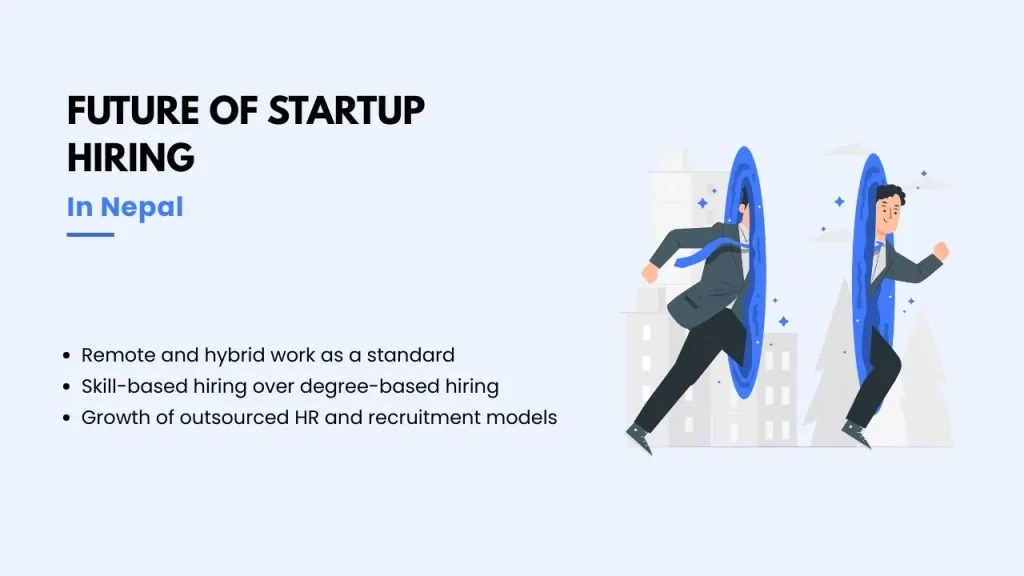
- Remote & Hybrid Work: Access talent beyond major cities, compete for global projects
- Skill-Based Hiring: Focus on hands-on skills over degrees
- Growth of Outsourced HR: Lean operations without compromising quality
- Employer Branding: Differentiate startups despite lower salaries
Employer branding is becoming a differentiator
As the competition to hire talented employees grows, the employer branding of the Nepal startups will gain more importance in recruiting employees.
Startups that clearly communicate
- Mission and vision
- Learning opportunities
- Team culture
- Growth paths
will shine through even if they may not be able to compete with corporate salaries.
Conclusion
Hiring is one of the most critical challenges for startups in Nepal. Limited budgets, skill gaps, competition, lengthy processes, and cultural fit risks make recruitment a complex process.
With a structured approach, strategic support, and focus on skills and culture, startups can build strong teams that drive growth and long-term success. Talent acquisition is no longer just an operational task. it’s a competitive advantage.
FAQs
What are the biggest hiring challenges for startups in Nepal?
Startups in Nepal struggle with limited budgets, talent shortages, long hiring cycles, and competition from larger companies.
Why do startups in Nepal find it hard to hire experienced talent?
Most startups cannot match corporate salaries or job security, while experienced professionals prefer remote global roles with better pay.
How can startups reduce their hiring time?
By using structured hiring processes and external recruitment support. This helps shortlist job-ready candidates faster.
What are the common hiring mistakes startups in Nepal make
Hiring too fast, skipping structured interviews, and ignoring cultural fit are common mistakes. These often lead to early attrition.
Can recruitment outsourcing help startups in Nepal
Yes. Recruitment outsourcing saves time, improves candidate quality, and reduces internal workload for founders and HR teams.
How can TalentSathi help startups hire better in Nepal
TalentSathi provides startup-focused hiring, screened job-ready candidates, and affordable direct hire services to reduce hiring risks.