If you were involved in hiring in Nepal within the past 10 years, you have most likely witnessed huge changes. These were the days when a company could get away with using only newspaper advertisements, notice boards, or even relatives’ recommendations to hire employees. Nowadays, recruitment occurs online, on job portals, on LinkedIn, and even through AI-based recruitment systems.
The Nepal job market is changing rapidly. Post-pandemic, businesses recognised the power of technology in attracting the right talent. Websites such as MeroJob, Kumarijob, JobsNepal, and LinkedIn have become destinations for both employers and job seekers.
But as digital hiring in Nepal is on the rise, it has not entirely replaced traditional hiring. Both recruitment methods in Nepal have their own advantages, and now a combination of both, a hybrid model with a balanced touch of human and technology, is used in many Nepali companies.
What is Traditional Hiring in Nepal??

Traditional hiring refers to the manual staff hiring process. Most communication occurs in person. It’s the oldest form of recruitment in HRM still used by many companies.
A classic traditional staff hiring process includes several different recruitment methods such as:
- Collecting printed CVs and application forms
- Carrying out written or physical tests
- In-person interviews
- Manual process of shortlisting and selection
This is a manual hiring process which is usually time-consuming. It assists employers in developing trust and evaluating the applicants face-to-face.
Characteristics of Traditional Hiring:
- Bases on face-to-face and written records.
- Heavily dependent on personal communication.
- Slower and costlier
- Poor global connectivity.
What is Digital Hiring in Nepal?
Digital hiring involves the usage of online technology and tools to attract, screen and employ the candidates. It is more cost-effective, more data-driven and faster. It is not merely a question of posting job it is all about establishing a web-based hiring ecosystem.
Job portals like InternSathi, Merojob, Kumarijob, LinkedIn, and JobsNepal are also increasing the rate of digital hiring in Nepal. Facebook job groups too have gained popularity among start-ups and freelancers. Here is a study of how institutions in Nepal view and accept e-recruitment
Digital hiring tools can include:
- Online job boards
- Social media campaigns
- Applicant Tracking Systems (ATS)
- Skill assessment platforms
- Video interviews
It’s not only faster than traditional hiring also helps employers make better, data-based hiring decisions, which is one of the key benefits of digital recruitment.
Characteristics of Digital Hiring:
- Depends on the internet and the online platforms.
- Uses automation and analytics.
- Expanded coverage and a large pool of candidates.
- Less paperwork and administration.
- Data-driven insights
Key Differences Between Traditional and Digital Hiring in Nepal (2026)
Here is a comparison that helps employers understand which method suits their hiring needs.
| Aspect | Traditional Hiring | Digital Hiring |
| Accessibility | Works even without internet access | Requires digital skills and connectivity |
| Cost | Expensive (ads, paper, events) | Cheaper and better scalability |
| Speed | Slower and manual | Fast and automated |
| Reach | Limited to local areas | Nationwide and even global |
| Efficiency | Manual and error-prone | Organized and trackable |
| Data Use | Minimal analytics | Uses metrics and insights |
The main difference between traditional and digital hiring in Nepal can be seen in speed, cost, and accessibility.
Trend in Nepal:
Digital hiring is now preferred by most companies as it is lcost-saving and faster, aligning with current Nepal digital recruitment trends. However, the traditional methods are still effective in industries like hospitality.
A lot of organizations adopt hybrid recruitment, which is a combination of the two different recruitment methods, that is, online sourcing and face-to-face interviews.
Traditional Hiring Methods Used in Nepal (2026 Update)
1. Word-of-Mouth Referrals
In Nepal, referrals are common. It is based on personal recommendations that businesses find employees whether from employees or people in society. It is fast, free, and a way to build trust, but it can also cause favouritism or bias.
2. Newspaper advertisements
Newspapers used to be the primary source of job postings before job portals. To this day, many companies still promote vacancies in the same way. It is expensive, not long-lasting and is restricted to fewer job seekers.
3. Walk-in Interviews/Applications
In this process, the applicants are physically present in the company where they submit their applications or take an interview. Though it promotes face-to-face communication, it restricts the number of applicants beyond the city.
4. Job fairs & Career Events
These events are frequently held in universities and professional associations. In one day, employers face hundreds of job applicants. They are wonderful in terms of brand exposure, but require a lot of planning and budget.
5. Recruitment Agencies [Traditionals]
With online tests and video interviews, it is simpler to hire based on skills. These tools enable the HR departments to narrow down qualified candidates even prior to meeting them face-to-face.
Advantages:
- Hands-on and face-to-face communication.
- Building trust based on networks.
- Accessibility to those with limited access to the internet.
- Applicable in specific positions which need urgent recruitment.
Disadvantages:
- Limited candidate pool
- Slower hiring process
- Expensive advertising (e.g., newspaper ads)
- Risk of favouritism or bias
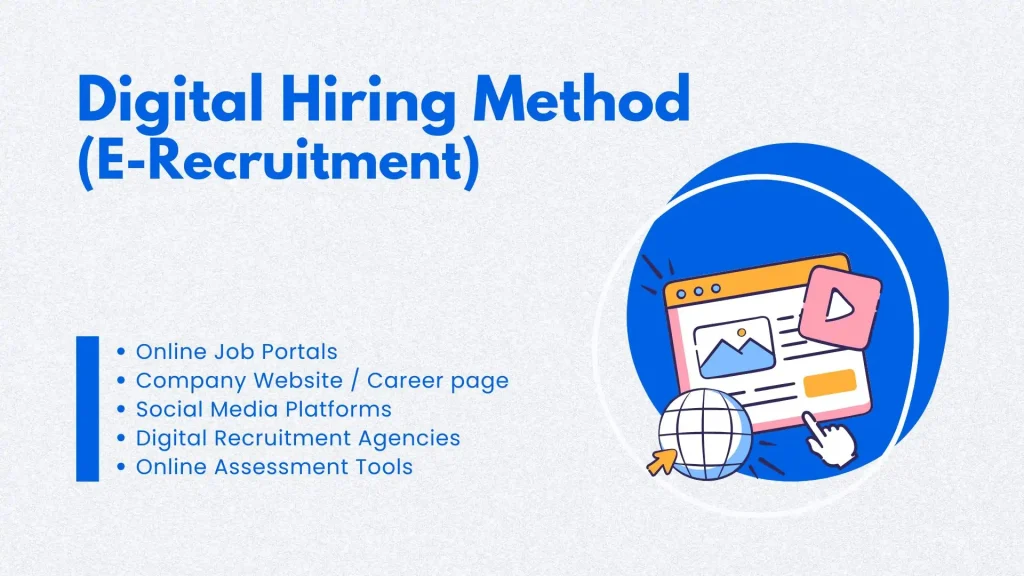
Digital Hiring Methods Used in Nepal (2026 Update)
1. Online Job Portals
Job portals have become central to online recruitment in Nepal, such as MeroJob, Internsathi, and Kumarijob. Companies can post job ads and reach thousands of candidates immediately. Applications can also be made within minutes, anywhere.
2. Company Website/ Career Page
Most businesses now have their own career sections on their websites. It assists them in recruiting direct candidates, building brand trust, and overseeing the recruitment process independently.
3. Social Media Platforms
LinkedIn, Facebook and Instagram have become one of the most important hiring systems. They assist employers in reaching a particular channel, particularly young professionals.
4. Digital Recruitment Agencies
These agencies are a mix of marketing and technology. They rely on data analytics and automation to shortlist candidates faster as compared to traditional agencies.
5. Online Assessment Tools
With online tests and video interviews it is simpler to hire based on skills. These tools enable the HR departments to narrow down qualified candidates even prior to meeting them face-to-face.
Advantages:
- Wider reach and a larger candidate pool
- Cost-effective compared to traditional advertising
- Data-driven insights for better decision-making
- Less bias with standardized tests.
Disadvantages:
- Requires internet access and digital literacy.
- Possibility of a large number of unqualified candidates.
- Cybersecurity concerns and data privacy.
- Risk of technical glitches during online assessments.
The Role of Technology & Tools in Digital Hiring
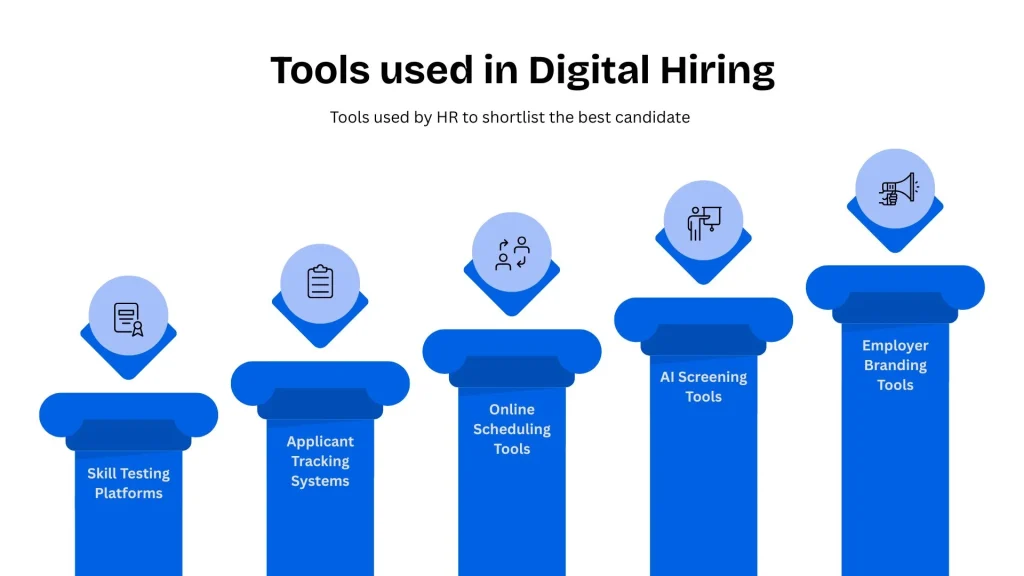
Recruitment is being transformed at every level by technology. There are various tools now to shortlist the best candidate. The following are some of the tools that an HR team in Nepal must be familiar with:
- Applicant Tracking Systems (ATS): Help to track, shortlist, and manage applications automatically.
- Skill Testing Platforms: Assess the skills by use of tests or assignments.
- Online Scheduling Tools: Zoom, Google Meet, and Calendly save time for interviews.
- AI Screening Tools: AI tools that screen resumes by job relevance.
- Employer Branding Tools: Social media marketing and content creation improve visibility.
Even small businesses in Nepal can start with free or low-cost tools. It is not aimed at substituting people; it is destined to make the staff hiring process smarter and easier.
How Job Seekers Can Prepare for Digital Hiring
If you are a Job seeker, making sure you understand how digital hiring works can increase your chances.
- Create a strong LinkedIn profile.
- Use professional photos and fill your bio.
- Learn how to attend video interviews confidently.
- Keep digital copies of your certificates ready.
- Participate in online skill tests and certifications.
Also, keep your online presence clean; employers review social media before shortlisting.
Hybrid Hiring: Combining the Best of Both Worlds

Hybrid recruiting combines both the online and traditional approaches. You may shortlist online, then interview in person. The strategy would be feasible in Nepal’s diverse market.
Why Hybrid hiring in Nepal Works:
- Keeps a personal touch while saving time
- Targets both online and offline candidates.
- Reduces hiring costs
The best practice would be to apply technology in the initial phase of the process, but use human interaction in the final selection. You should know about effective recruitment methods in Nepal to hire the best talent.
Skills-Based Recruitment: The Future of Hiring in Nepal
One of the most significant transformations in digital hiring in Nepal is skills-based recruitment. Employers are not only focusing on degrees, but they are also evaluating what the candidates can actually do. Common examples include Marketing Simulations, Coding Challenges, and Design / Written Tests.
This will help employers to find the right talent much fast and offer a chance to new graduates who lack experience.
Benefits:
- Reduces hiring bias
- Focuses on real talent, not just credentials
- Saves time in screening and training
In Nepal, this is especially helpful as most graduates are skilled and have no exposure to the corporate world. Skills-based hiring gives them a fair start.
In Nepal, it is particularly handy, as most graduates are skilled and have no exposure to the corporate world. Hiring based on skills provides them with a fair start.
The Role of Recruitment Agencies in Modern Hiring

Recruitment agencies in Nepal are also transforming. Previously, they worked manually, keeping piles of CVs. Most of them now use digital databases, AI screening tools and social media campaigns to identify the best talent.
There are various benifits of a Recruitment Agencies, the companies can:
- Save time
- Get pre-screened candidates
- Improve employer branding
If you’re a growing business with limited HR resources, hiring a marketing or recruitment agency can be a smart investment to hire the best candidates.
Conclusion: The Future of Hiring in Nepal is Digital
The hiring environment in Nepal is changing rapidly. Online recruitment has facilitated faster, clever and effective recruitment. However, the personal relation is not abandoned yet, especially in a country where trust is a significant element in the hiring process.
The best solution is a hybrid solution: to merge the efficiency of digital tools and the friendliness of human communication.
FAQ
How can I get myself employed in Nepal?
Create strong online profiles, build skills, and apply through trusted job portals.
What are the most effective methods of recruitment in HRM today?
Online job portals, social media hiring, agencies, and skills-based assessments.
When should a company hire a marketing agency for recruitment?
When they need stronger employer branding or wider digital reach.
What is skills-based recruitment and why is it important in Nepal?
It focuses on practical skills and helps Nepali employers find capable talent faster.
How cost-effective is digital hiring vs traditional in Nepal?
Digital hiring is usually cheaper and faster than traditional methods.
What challenges should employers expect when moving to digital hiring in Nepal?
Limited digital readiness, internet issues, and data security concerns.